Organic SEO Explained, How Real Search Traffic Is Built
Organic SEO is the process of earning visibility in search results without paid ads.
It focuses on relevance, usefulness, and trust. When people search on Google, they mostly click unpaid results. These results appear because pages match intent, not because money was spent.
Organic SEO works when a page solves a real problem clearly. Search engines reward pages that answer questions better than others. Unlike ads, organic search traffic does not stop when budgets pause. That is why long-term growth depends on organic SEO.
Organic SEO also builds credibility. Users trust natural results more than sponsored listings. This approach combines content, structure, and technical quality. When done right, organic search becomes a steady traffic source.
What Organic Search Really Means
Organic search refers to unpaid listings shown on search engine results pages.
These listings appear because of relevance, not bidding.
How Organic Results Appear
Search engines scan the web using automated systems. They store pages that meet quality and access standards. Pages appear in organic search when they:
- Match the search intent
- Answer the query clearly
- Show signs of trust and usefulness
Organic SEO helps search engines understand these signals.
Organic Results vs Paid Listings
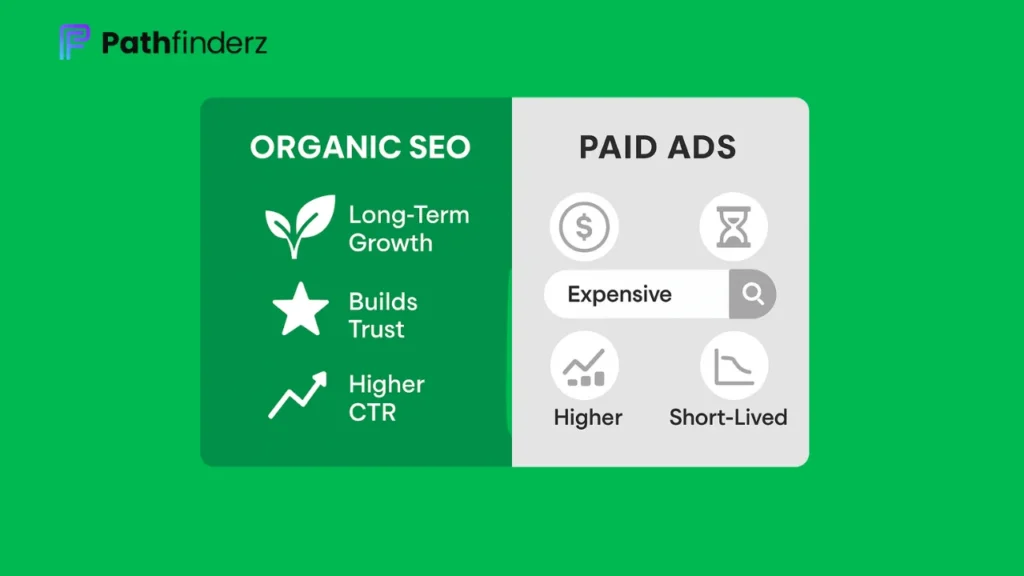
Paid listings show because advertisers bid on keywords. Organic listings appear based on content value and relevance. Key differences include:
- No cost per click for organic traffic
- Longer-lasting visibility
- Higher user trust
- Slower initial growth
Organic search engine optimization focuses on these unpaid results.
Why Users Prefer Organic Search
Most users skip ads when they want answers. They scroll to organic results for information and guidance. Organic search results feel more neutral. They appear earned, not promoted. This behavior makes organic SEO critical for:
- Blogs
- Service pages
- Educational content
- Long-term brand visibility
How Search Engines Judge Organic Pages
Search engines analyze pages using multiple signals, including:
- Topic relevance
- Content clarity
- Page structure
- User behavior
- References from other sites
Organic SEO aligns pages with these evaluation systems.
Common Misunderstanding About Organic Search
Organic does not mean random or automatic. It requires planning, testing, and steady improvement.
Without optimization, pages often remain invisible. Organic SEO is what bridges that gap.
How People Use Organic Search Today
People use search engines to solve problems fast. Most queries start with a question or clear need.
Organic SEO works best when it follows real search behavior. That behavior has changed over time.
Search Starts With Intent
Every search has a goal. Users want answers, options, or solutions.
Common intent types include:
- Learning how something works
- Comparing choices before a decision
- Finding a specific page or brand
- Solving an urgent issue
Organic search optimization starts by matching that intent.
Why Informational Searches Dominate
Most searches are not about buying. People want clarity first.
Examples include:
- How a process works
- Why something is not working
- What option fits a situation
Organic SEO supports these searches by offering clear explanations. Pages that rush sales often lose trust. Helpful pages keep users longer.
How Users Scan Search Results
Users rarely read every result. They scan titles and short descriptions.
They click results that:
- Match their wording
- Look specific
- Promise a clear answer
Organic SEO improves click rates by aligning with this pattern.
Device and Location Matter
Search behavior changes by device. Mobile users want quick answers. Desktop users explore deeper content. Local users expect nearby relevance.
Organic search strategy must consider:
- Screen size
- Search context
- Time sensitivity
Ignoring these factors limits visibility.
Why Users Skip Paid Results
Many users scroll past ads. They trust organic results more.
Reasons include:
- Ad fatigue
- Bias concerns
- Past poor ad experiences
This makes organic search marketing valuable for trust building.
What This Means for Content Creation
Content must answer one problem clearly. Each page should focus on a single goal.
Strong organic SEO pages:
- Address the question early
- Stay focused
- Avoid distractions
- Respect user time
Search engines notice this behavior.
How Search Engines Understand Pages
Search engines do not see pages like humans. They read structure, signals, and patterns.
Organic SEO helps pages communicate meaning clearly.
Crawling Comes First
Search engines use automated systems to discover pages. They follow links across websites.
Pages may not appear if:
- They lack internal links
- They block access accidentally
- They load too slowly
Organic search engine optimization ensures pages stay reachable.
Indexing Decides Visibility
After crawling, pages enter an index. Only indexed pages can rank.
Common indexing issues include:
- Duplicate content
- Thin pages
- Broken redirects
- Missing signals
Organic SEO optimization fixes these gaps early.
How Meaning Gets Interpreted
Search engines analyze:
- Page topic
- Supporting terms
- Context relationships
- Content depth
They rely less on exact phrases. They focus more on meaning. This is why organic search optimization avoids repetition.
Role of Page Structure
Clear structure improves understanding. Headings guide interpretation. Good structure includes:
- One main topic
- Logical sections
- Clear subtopics
- Clean formatting
Organic SEO benefits from predictable structure.
Why Some Pages Never Rank
Many pages fail due to basics. They exist but lack purpose.
Common reasons include:
- No clear topic
- Weak intent match
- Poor internal linking
- Low content value
Organic search in SEO depends on clarity first.
Signals That Improve Understanding
Search engines trust pages that show:
- Consistent topic focus
- Helpful explanations
- Clean navigation
- Stable performance
Organic SEO strengthens these signals over time.
Ranking Factors That Actually Matter
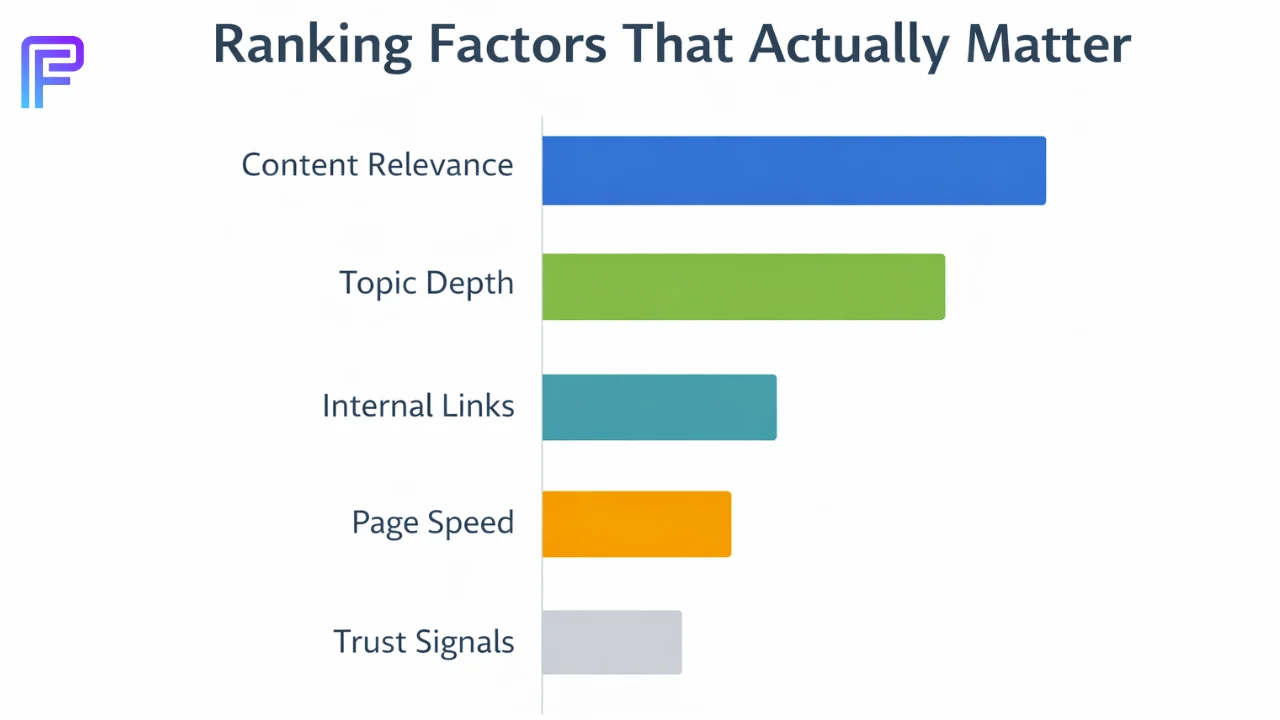
Search engines use many signals to rank pages. Some matter more than others. Organic SEO improves rankings by focusing on what search systems value most.
Content Relevance Comes First
Pages must match the search intent clearly. Relevance decides whether a page deserves visibility.
Strong relevance includes:
- Clear topic focus
- Direct answers to questions
- Supporting details that add clarity
Organic search optimization fails when content drifts off-topic.
Topical Depth Builds Trust
Thin pages struggle to rank. Depth shows effort and understanding. Topical depth means:
- Covering the full problem
- Explaining related points
- Avoiding surface-level content
Organic search engine optimization rewards completeness.
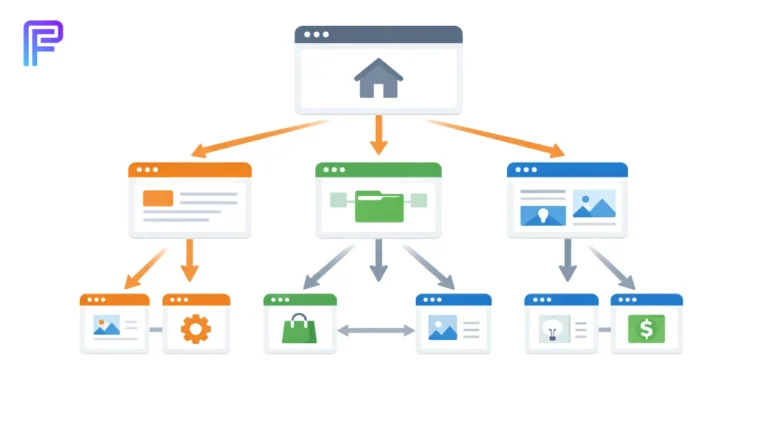
Internal Links Shape Importance
Internal links guide search engines. They show which pages matter most.
Good internal linking:
- Connects related topics
- Uses natural anchor text
- Helps crawlers find pages
Organic SEO strategy should plan internal paths early.
External References Matter
Links from other sites act as trust signals. Quality matters more than volume.
Strong references usually:
- Come from relevant sites
- Appear naturally in content
- Support the topic context
Organic search marketing relies on earned trust.
User Signals Influence Rankings
Search engines watch user behavior. They learn from interaction patterns.
Key signals include:
- Time spent on page
- Scrolling behavior
- Return visits
Organic SEO improves when pages keep users engaged.
Page Performance Affects Visibility
Slow pages lose attention. Search engines notice this. Important performance areas:
- Page load time
- Mobile usability
- Visual stability
Organic SEO optimization includes performance checks.
Consistency Beats Short-Term Tactics
Ranking growth takes time. Sudden tricks rarely last. Organic SEO ranking improves with:
- Regular updates
- Steady content quality
- Ongoing technical care
Consistency builds lasting visibility.
Keyword Use Without Overuse
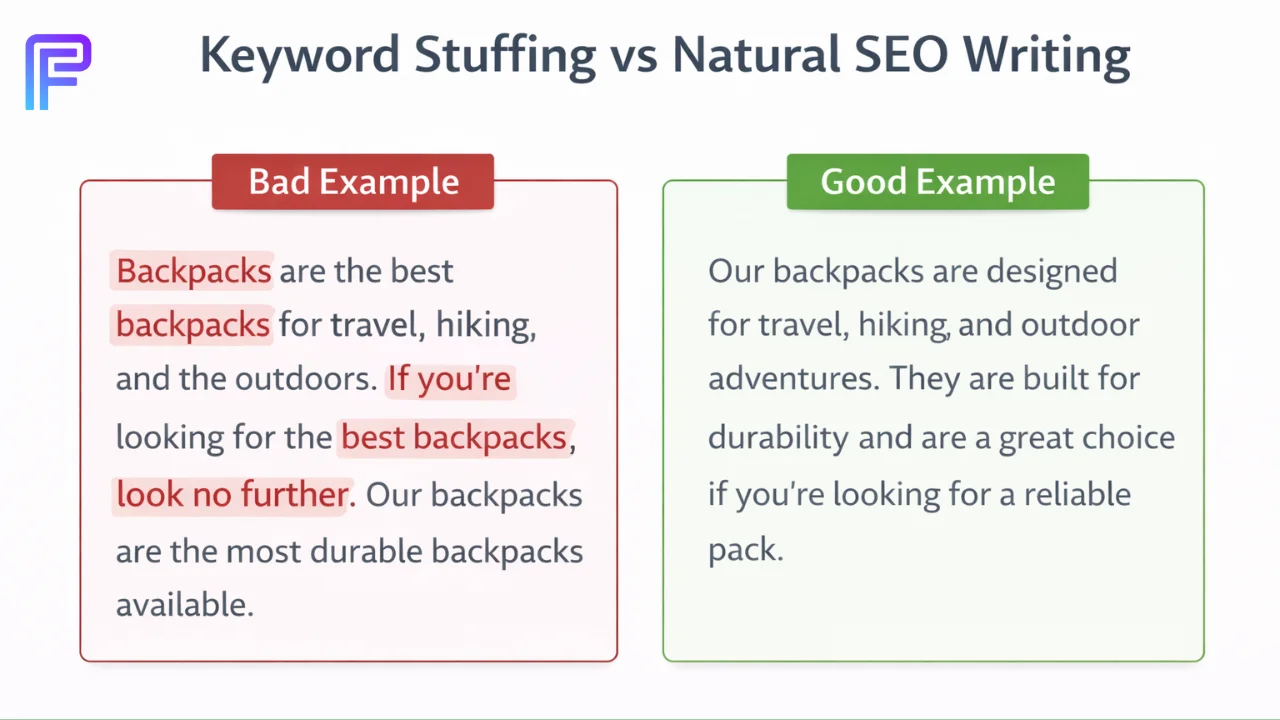
Keywords still matter. How they are used matters more. Organic SEO works best when language sounds natural.
How Search Engines Read Language
Search engines do not scan pages word by word. They look for meaning and relationships. They analyze:
- Topic signals
- Related terms
- Context clues
- Content flow
Organic search optimization depends on clarity, not repetition.
Why Repeating Phrases Hurts Rankings
Overuse creates noise. It reduces readability and trust. Common problems include:
- Forced phrasing
- Awkward sentences
- Lower user engagement
Organic SEO optimization avoids this pattern.
Context Beats Exact Matching
Search systems understand variations. They connect ideas, not just words. Good pages include:
- Natural language
- Supporting concepts
- Related terminology
Organic search engine optimization benefits from context-driven writing.
Using Keywords Where They Matter
Placement still plays a role. Focus on important locations.
Key areas include:
- Page title
- Main heading
- One supporting heading
- Early content section
Organic SEO should never feel mechanical.
Balancing Keywords With Readability
Readable content performs better. Users stay longer.
To keep balance:
- Write for people first
- Edit for clarity
- Remove forced terms
Organic search in SEO succeeds when users feel understood.
Signs Keyword Use Is Working
Healthy keyword usage shows:
- Smooth reading flow
- Stable rankings
- Better engagement
- Fewer bounces
Organic SEO strategies aim for these outcomes.
How to Research Search Topics Properly
Good research starts before writing. It focuses on problems, not just phrases.
Organic SEO improves when topics reflect real search needs.
Start With Real User Problems
Every strong page solves one problem. Research should begin with questions people ask. Good sources include:
- Search suggestions
- Related searches
- Forums and discussions
- Support queries
Organic search optimization works when content mirrors user language.
Understand Intent Before Volume
High volume does not always mean value. Intent matters more. Main intent groups include:
- Learning and understanding
- Comparing options
- Taking action
Organic SEO strategy prioritizes intent over raw numbers.
Group Topics by Purpose
One page should serve one goal. Mixing intents weakens clarity. Group topics by:
- Informational needs
- Commercial research
- Transaction readiness
Organic search engine optimization benefits from clear focus.
Avoid Chasing Trends Blindly
Trends fade fast. Stable topics bring lasting traffic. Short-lived trends often:
- Attract low engagement
- Fail to convert
- Require constant updates
Organic SEO works better with evergreen topics.
Use Supporting Terms Naturally
Supporting terms clarify meaning. They add depth without repetition. Use them to:
- Explain subpoints
- Add context
- Strengthen topic signals
Organic search in SEO relies on semantic coverage.
Validate Topics Before Writing
Check what already ranks. Look for gaps. Ask:
- What is missing
- What is unclear
- What can be explained better
Organic SEO improves when pages add real value.
Content That Performs in Organic Results
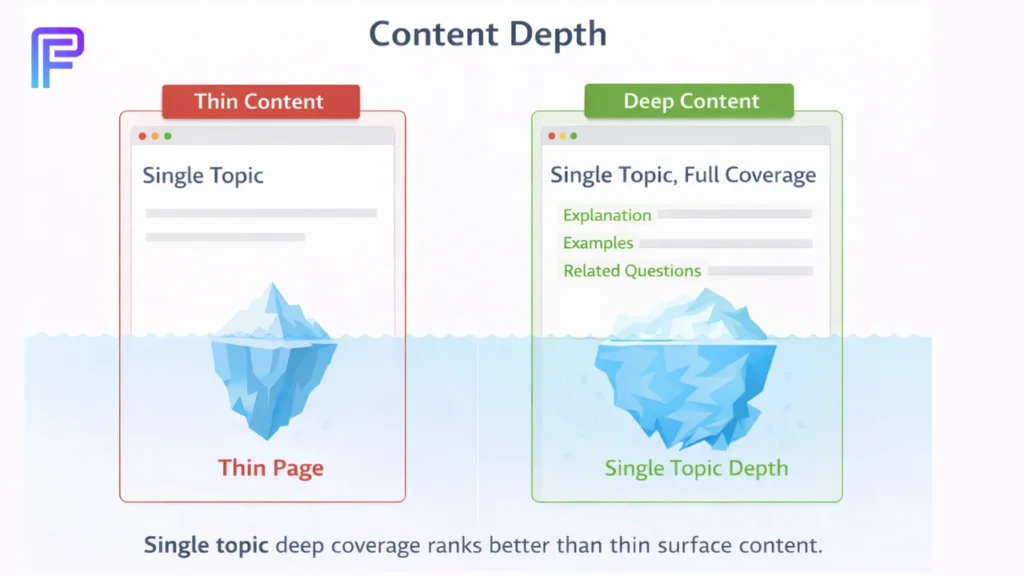
Content ranks when it helps users fast. Long pages alone do not win. Organic SEO favors pages that solve one clear problem.
Why Shallow Content Fails
Short pages often miss key details. They answer part of the question, not all. Common issues include:
- Vague explanations
- Missing steps
- No supporting context
Organic search optimization rewards completeness, not length alone.
Depth Means Coverage, Not Fluff
Depth comes from clarity. Each section should explain one idea fully. Good depth includes:
- Clear definitions
- Practical context
- Simple examples
Organic search engine optimization improves when content feels finished.
One Page, One Main Problem
Each page needs a single focus. Mixing topics confuses users and search engines. Strong organic SEO pages:
- Target one intent
- Avoid side topics
- Stay consistent from start to end
This improves relevance signals.
Answer Important Questions Early
Users scan before reading. They want answers fast. Place key points:
- In the first few paragraphs
- Near headings
- In clear sentences
Organic search in SEO benefits from early clarity.
Use Structure to Guide Reading
Structure helps users stay longer. It also helps search engines interpret content. Good structure includes:
- Short paragraphs
- Clear headings
- Logical flow
Organic SEO optimization relies on clean layout.
Keep Language Simple and Direct
Plain language performs better. It keeps reading effort low.
Avoid:
- Buzzwords
- Overused phrases
- Forced terminology
Organic search marketing works when writing feels natural.
Update Content When It Gets Stale
Search behavior changes. Old content loses relevance. Regular updates help:
- Refresh accuracy
- Add missing details
- Improve rankings
Organic SEO strategy includes ongoing reviews.
Page Structure That Helps Rankings
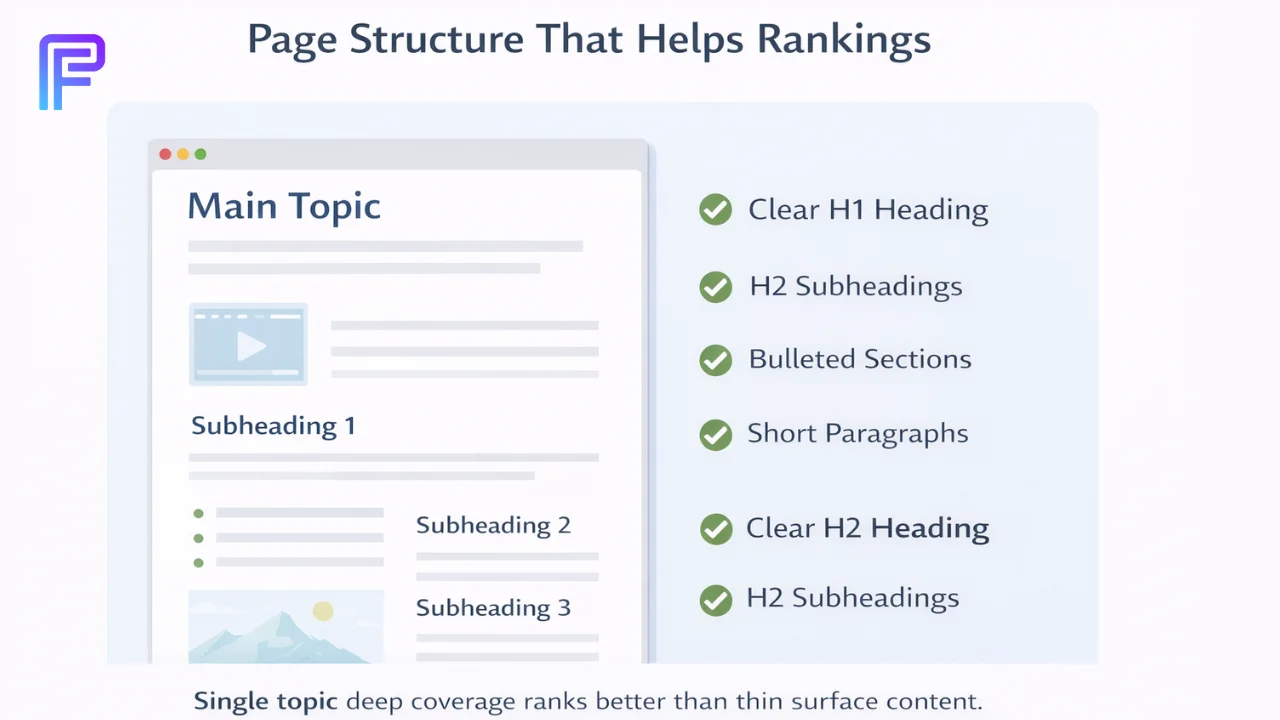
Structure shapes how pages get read and ranked. Clear layout improves understanding for users and search systems. Organic SEO benefits when structure stays simple and predictable.
Use One Clear Main Topic
Each page needs one main subject. Supporting sections should explain that subject only. Good structure avoids:
- Topic switching
- Unclear focus
- Repeated ideas
Organic search optimization improves when intent stays tight.
Headings Guide Both Users and Crawlers
Headings break content into parts. They show hierarchy and meaning. Effective headings:
- Describe the section clearly
- Follow logical order
- Avoid vague wording
Organic search engine optimization relies on readable headings.
Short Paragraphs Improve Flow
Large text blocks push users away. Short paragraphs keep attention. Best practice includes:
- Two to three lines per paragraph
- One idea per paragraph
- Clean spacing
Organic SEO performs better with readable flow.
Lists Help Users Scan Faster
Lists highlight key points. They reduce reading effort.
Use lists to:
- Explain steps
- Share features
- Summarize benefits
Organic search in SEO benefits from scannable formats.
Place Important Information Early
Users do not scroll forever. Key points should appear near the top. Early placement helps:
- Reduce bounce rates
- Improve engagement
- Support ranking signals
Organic SEO optimization rewards clarity upfront.
Avoid Visual Distractions
Too many elements distract users. Clean pages perform better. Limit:
- Excess images
- Popups
- Unnecessary widgets
Organic search marketing works best on focused pages.
Consistent Layout Builds Trust
Consistency helps navigation. Users know what to expect. Consistent structure includes:
- Similar heading styles
- Predictable section flow
- Clear spacing
Organic SEO strategy benefits from stable layouts.
Technical Issues That Block Visibility
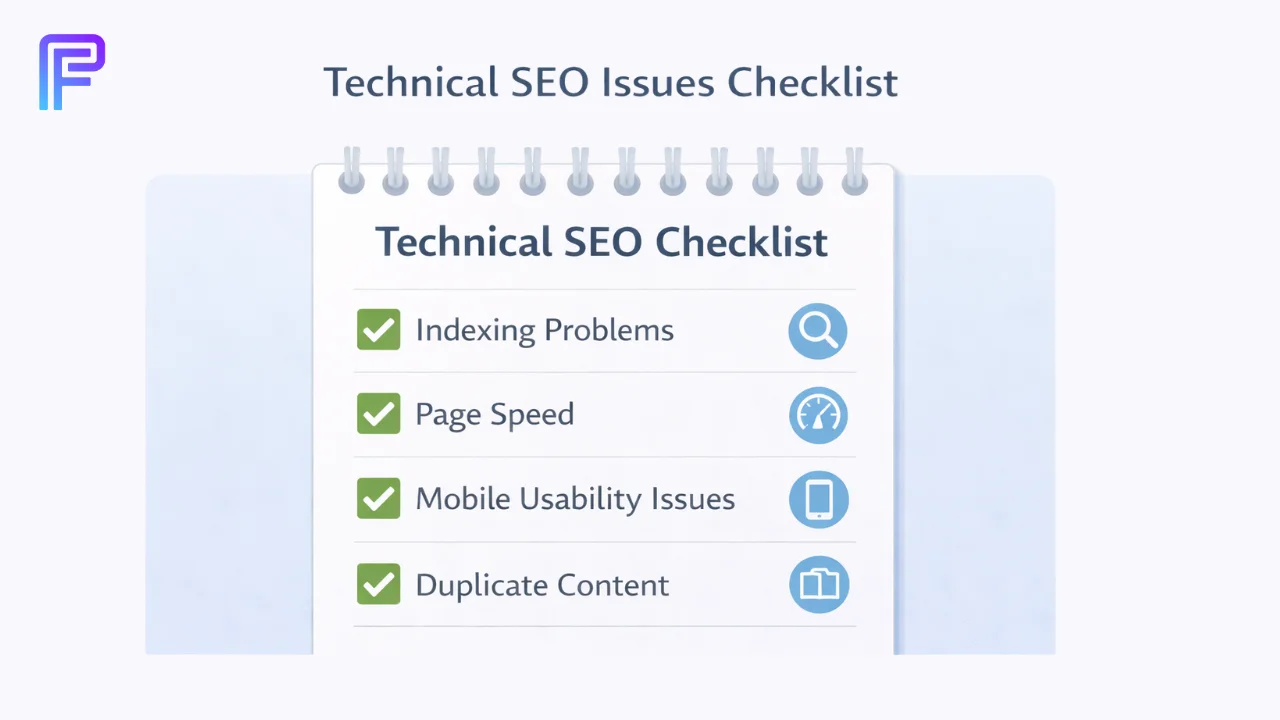
Many pages fail before content matters. Technical gaps often stop search engines early. Organic SEO depends on clean access and stability.
Indexing Problems Hide Pages
Pages must enter the search index. If they do not, they cannot rank. Common causes include:
- Noindex tags
- Blocked paths
- Incorrect canonicals
- Duplicate URLs
Organic search optimization starts with index checks.
Crawl Barriers Reduce Discovery
Search engines follow links to find pages. Broken paths slow this process. Crawl issues often come from:
- Orphan pages
- Deep page levels
- Broken internal links
Organic search engine optimization improves when paths stay clear.
Duplicate Content Creates Confusion
Similar pages compete with each other. Search engines struggle to choose one. Duplicate issues include:
- URL variations
- Reused templates
- Thin location pages
Organic SEO optimization resolves this with clarity.
Page Speed Affects Access
Slow pages frustrate users. Search engines notice this behavior. Speed problems often come from:
- Heavy scripts
- Large images
- Poor hosting setup
Organic search in SEO benefits from fast loading.
Mobile Usability Is Not Optional
Most searches happen on phones. Mobile issues limit reach. Common mobile gaps include:
- Text too small
- Elements too close
- Layout shifts
Organic SEO strategy must prioritize mobile use.
Security and Stability Matter
Secure sites build trust. Unstable sites lose access. Important checks include:
- HTTPS usage
- Valid certificates
- Stable server response
Organic search marketing relies on reliable access.
Fix Technical Issues Early
Technical fixes support all other work. They create a strong base. Without fixes:
- Content struggles
- Links lose value
- Rankings stall
Organic SEO works best on solid foundations.
User Experience Signals Search Engines Track
Search engines measure how people interact with pages. They learn from real behavior, not claims. Organic SEO improves when users stay, read, and engage.
Time Spent on Page
Time shows interest. Short visits often signal weak relevance. Longer time usually means:
- Content matched intent
- Information was useful
- Reading flow felt natural
Organic search optimization benefits from clear, focused pages.
Scrolling and Interaction
Scrolling shows engagement. Clicks show intent. Positive signals include:
- Scrolling past the first screen
- Clicking internal links
- Interacting with content
Organic search engine optimization improves when pages invite action.
Return Visits Matter
Users who return show trust. Search engines notice this pattern. Return visits often come from:
- Helpful explanations
- Clear answers
- Updated content
Organic SEO strategy builds loyalty, not one-time clicks.
Bounce Rate Context Matters
Leaving fast is not always bad. But patterns matter. High bounce with low time suggests:
- Poor intent match
- Confusing layout
- Weak opening
Organic search in SEO improves when first impressions are clear.
Clarity Beats Design Tricks
Fancy layouts do not guarantee results. Clarity matters more. Strong pages focus on:
- Easy reading
- Simple layout
- Clear structure
Organic SEO optimization favors usability over decoration.
UX Issues That Hurt Rankings
Common problems include:
- Hard-to-read text
- Too many popups
- Slow interactions
Fixing these supports organic search marketing.
Building Authority Without Risk
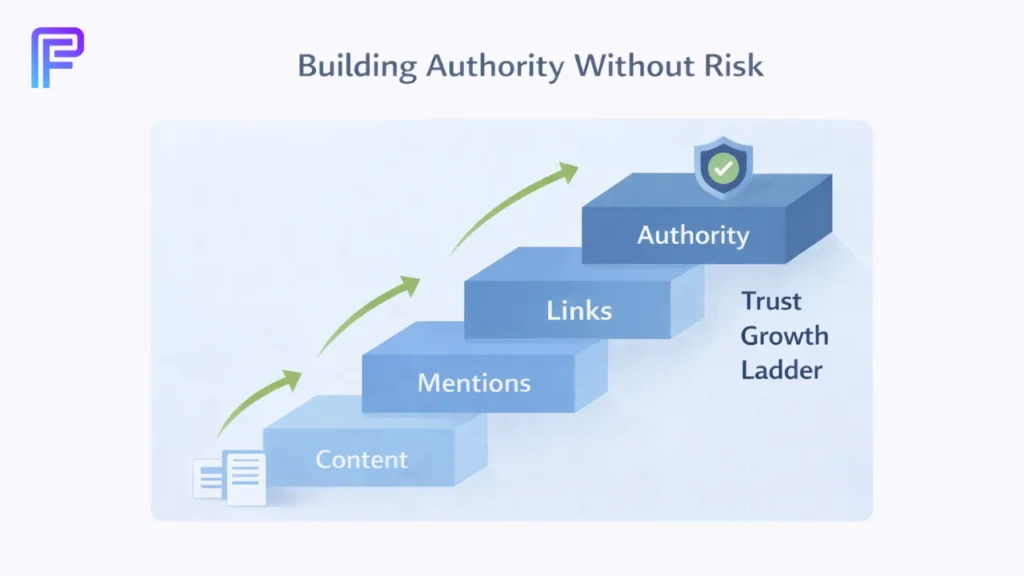
Authority tells search engines your content is trusted. Trust grows from relevance and consistency. Organic SEO builds authority slowly, but safely.
What Authority Really Means
Authority is not just links. It is recognition over time. Signals include:
- Mentions from relevant sites
- Consistent topic coverage
- Stable content quality
Organic search optimization depends on earned trust.
Quality Beats Quantity
More links do not always help. Poor links can harm visibility. Strong links usually:
- Come from related topics
- Sit within useful content
- Appear natural
Organic search engine optimization rewards relevance.
Earned Links Perform Better
Earned links happen naturally. They reflect value, not placement. They often come from:
- Useful guides
- Original research
- Clear explanations
Organic SEO strategy focuses on value creation.
Risky Tactics to Avoid
Some shortcuts cause penalties. They damage long-term growth.
Avoid:
- Paid link networks
- Irrelevant placements
- Forced anchor text
Organic search in SEO works best without manipulation.
Consistency Builds Recognition
Authority grows with time. Consistency reinforces trust. Consistent effort includes:
- Publishing related topics
- Updating older pages
- Maintaining quality
Organic SEO optimization rewards steady work.
Authority Supports Every Ranking Factor
Trusted pages rank easier. They recover faster from changes. Organic search marketing becomes stronger as authority grows.
Organic Traffic Versus Paid Traffic
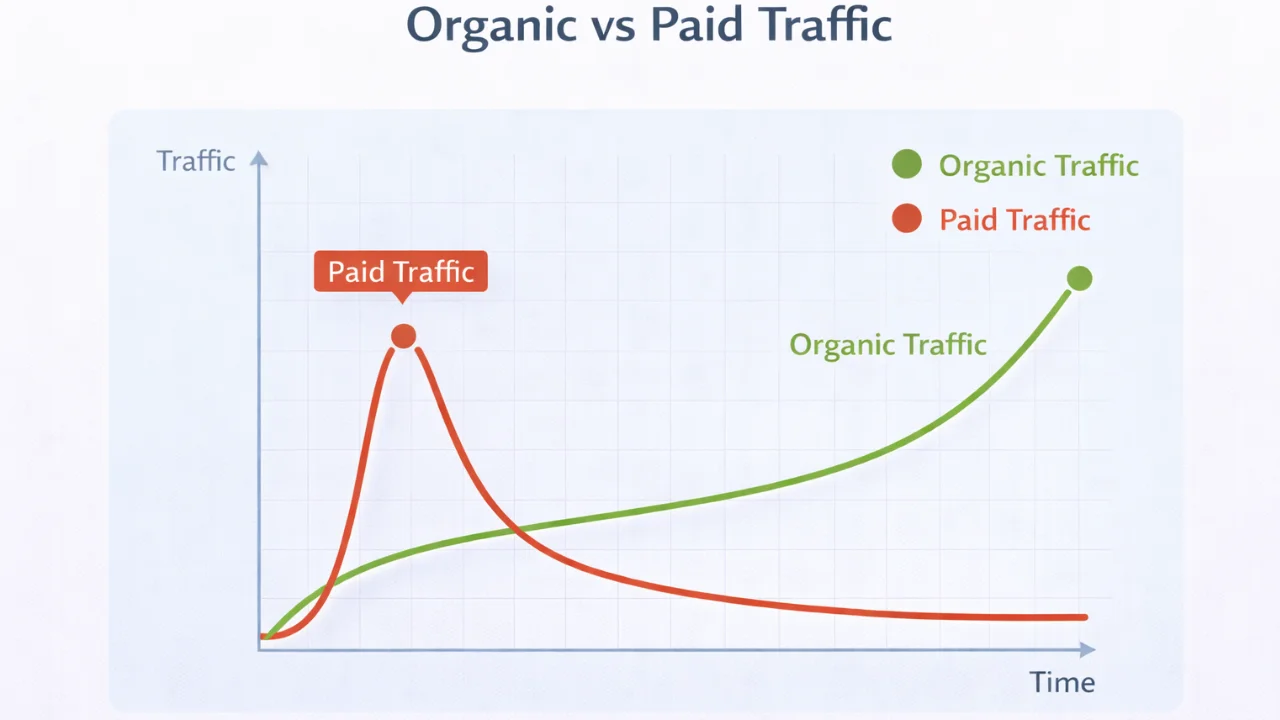
Both traffic sources have value. They serve different goals. Organic SEO focuses on steady growth. Paid ads focus on immediate exposure.
Cost Differences Over Time
Paid traffic stops when spending stops. Organic traffic continues once rankings hold. Key cost differences:
- Paid search needs constant budget
- Organic SEO needs upfront effort
- Long-term cost per visit drops with organic growth
Organic search optimization supports lasting returns.
Trust and Click Behavior
Users trust unpaid results more. They see them as earned, not promoted. Organic results often get:
- Higher click rates
- Longer visits
- Better engagement
Organic search engine optimization benefits from this trust.
Stability During Budget Changes
Ad budgets change often. Traffic drops when spending pauses. Organic SEO provides:
- Stable visit flow
- Predictable growth
- Less dependency on spend
This makes organic search marketing safer long term.
When Paid Traffic Makes Sense
Paid ads help during:
- Product launches
- Time-sensitive offers
- Testing new ideas
Organic SEO supports these efforts by building a base.
Using Both Together
Organic and paid work best together. Each fills a gap. Use organic SEO to:
- Build authority
- Reduce long-term costs
- Support content discovery
Use paid search to:
- Speed up visibility
- Test messaging
- Support short campaigns
Measuring Organic Performance Correctly
Tracking matters as much as ranking. Wrong metrics lead to wrong decisions. Organic SEO relies on meaningful data.
Rankings Alone Are Not Enough
Rankings change often. They do not show full performance. Rank tracking should:
- Focus on important queries
- Watch trends, not daily shifts
- Connect to traffic data
Organic search optimization needs context.
Traffic Quality Matters More Than Volume
More visits do not always mean success. Relevant visits convert better. Measure:
- Time on page
- Pages per visit
- Conversion actions
Organic search engine optimization improves when quality rises.
Use Search Console Data
Search Console shows how pages appear in search. It reveals real query data. Key insights include:
- Impressions
- Click-through rates
- Index coverage
Organic SEO strategy depends on this feedback.
Track Conversions Clearly
Traffic without results has limited value. Conversions show impact. Track actions like:
- Form submissions
- Signups
- Downloads
Organic search in SEO supports business goals when conversions grow.
Avoid Common Reporting Mistakes
Many reports are misleading. They focus on vanity metrics.
Avoid:
- Obsessing over single keywords
- Ignoring intent shifts
- Chasing short-term spikes
Organic SEO optimization improves with clear measurement.
Review Performance Regularly
Organic growth takes time. Reviews keep it on track.
Monthly checks help:
- Spot declines early
- Find content gaps
- Improve weak pages
Organic search marketing improves with steady review.
Why Most Sites Fail at Organic Growth
Failure usually comes from basics, not competition. Many sites skip foundations. Organic SEO fails when effort lacks direction.
Publishing Without Clear Intent
Many pages target vague ideas. They do not match real searches.
Common mistakes include:
- Covering too many topics
- Ignoring user questions
- Writing for keywords, not people
Organic search optimization starts with intent clarity.
Chasing Algorithms Instead of Users
Search rules change often. Users need to stay stable. Sites fail when they:
- Copy trends blindly
- Follow rumors
- Ignore readability
Organic search engine optimization works best when users come first.
Ignoring Technical Basics
Good content cannot rank if blocked. Technical gaps limit access.
Ignored basics include:
- Indexing errors
- Slow load times
- Broken internal links
Organic SEO strategy requires technical checks early.
Relying on Old Tactics
Some tactics no longer work. They create risk.
Examples include:
- Overusing exact phrases
- Low-quality link schemes
- Thin location pages
Organic search in SEO improves when outdated methods stop.
Lack of Consistency
One-time effort rarely succeeds. Organic growth needs repetition.
Consistency means:
- Publishing related topics
- Updating older content
- Monitoring performance
Organic SEO optimization rewards steady effort.
No Clear Measurement Plan
Without tracking, progress stays unclear. Decisions become guesswork. Organic search marketing needs regular review.
Timeline Expectations That Are Realistic
Organic growth takes patience. Quick wins are rare. Organic SEO builds results in stages.
Early Signs of Progress
Initial signals appear first. They show direction, not success.
Early signs include:
- Improved indexing
- Rising impressions
- Better click-through rates
Organic search optimization begins here.
Mid-Term Growth Phase
Traffic starts to grow steadily. Pages gain traction.
This phase often shows:
- Ranking stability
- More keyword coverage
- Increased engagement
Organic search engine optimization gains momentum.
Long-Term Compounding Effects
Strong pages keep improving. Results stack over time. Long-term benefits include:
- Stable traffic
- Lower cost per visit
- Higher trust
Organic SEO strategy focuses on compounding growth.
Why Patience Matters
Search engines test pages slowly. Trust builds over time.
Rushing changes often:
- Breaks progress
- Confuses signals
- Resets evaluation
Organic search in SEO rewards patience.
Set Expectations Early
Clear timelines prevent frustration. They guide better decisions.
Explain that:
- Results vary by niche
- Competition affects speed
- Quality shortens timelines
Organic SEO optimization works best with realistic goals.
Role of AI and Search Summaries
Search results now show direct answers.This changes how users click. Organic SEO must adapt to this shift.
How Search Summaries Affect Clicks
Some queries get answers on the results page. Users may not click any result.
This happens when:
- Questions are simple
- Answers are short
- Sources are summarized
Organic search optimization must offer depth beyond summaries.
Why Clear Answers Still Matter
Clear answers help visibility. They also support trust.
Pages that perform well:
- Answer the question early
- Add context after the answer
- Explain the reason behind facts
Organic search engine optimization benefits from clarity and structure.
Optimizing for Answer Engines
Answer engines favor clean structure. They extract short explanations.
Helpful formats include:
- Direct responses under headings
- Bullet explanations
- Simple definitions
Organic SEO strategy should support extraction without losing value.
What AI Cannot Replace
AI summaries lack depth. They do not handle nuance well.
Strong pages provide:
- Examples
- Edge cases
- Practical steps
- Real constraints
Organic search in SEO still rewards depth.
Preparing Content for Future Search
Future search favors usefulness. Thin pages lose ground.
Preparation includes:
- Updating key sections
- Improving clarity
- Removing filler
Organic SEO optimization stays relevant through maintenance.
Organic Visibility for Small Sites
Small sites can rank. Budget size is not the deciding factor. Organic SEO rewards focus and relevance.
Why Smaller Sites Can Compete
Search engines rank pages, not brands. Relevance beats size.
Small sites succeed when they:
- Target narrow topics
- Solve clear problems
- Avoid broad competition
Organic search optimization favors precision.
Focus Beats Coverage
Trying to cover everything fails. Focused coverage builds authority faster.
Effective focus includes:
- One niche topic
- Related subtopics
- Consistent publishing
Organic search engine optimization benefits from tight scope.
Local and Niche Opportunities
Local searches have less competition. Niche topics attract specific users.
Opportunities include:
- Location-based queries
- Industry-specific problems
- Specialized questions
Organic SEO strategy works well in narrow spaces.
Simple Structure Helps Smaller Teams
Small teams need efficiency. Complex systems slow progress.
Keep:
- Clear site structure
- Few content types
- Easy updates
Organic search in SEO improves with simplicity.
Avoid Overcomplication
Tools do not replace strategy. Many small sites overdo tools.
Focus first on:
- Content clarity
- Intent match
- Technical basics
Organic SEO optimization grows faster this way.
Choosing Help or Doing It Yourself
Some teams handle organic SEO in-house. Others need outside support. The right choice depends on time, skill, and goals.
When Doing It Yourself Makes Sense
In-house work fits when:
- The site is small
- The niche is narrow
- Timelines are flexible
DIY organic SEO works with steady learning and testing.
Signs You Need Outside Support
External help may be needed when:
- Growth has stalled
- Technical issues persist
- Content lacks direction
- Results need speed
Organic search optimization benefits from experience in these cases.
What Real Specialists Focus On
Good specialists prioritize basics first. They avoid shortcuts.
They focus on:
- Search intent alignment
- Technical health
- Content gaps
- Measured progress
Organic search engine optimization improves with clear priorities.
Red Flags When Hiring Help
Be cautious if a provider:
- Promises guaranteed rankings
- Avoids explaining methods
- Pushes fast results
Organic SEO strategy should feel transparent.
Hybrid Approach Works Well
Many teams combine efforts. They keep control while getting guidance.
Common hybrid setups include:
- Strategy support
- Technical audits
- Content review
Organic search in SEO benefits from shared responsibility.
Myths That Still Hurt Rankings
Old beliefs still cause damage. They slow progress and add risk. Organic SEO improves when myths are removed.
Myth: SEO Is a One-Time Task
Search changes often. Pages need updates.
Without updates:
- Rankings fade
- Content becomes outdated
- Trust declines
Organic search optimization requires ongoing work.
Myth: More Content Always Wins
Volume alone does not rank. Relevance matters more.
Too much content can:
- Dilute focus
- Create duplication
- Confuse search engines
Organic search engine optimization favors quality.
Myth: Tools Replace Strategy
Tools provide data. They do not make decisions. Organic SEO strategy still depends on:
- Human judgment
- Intent understanding
- Clear priorities
Myth: Links Fix Everything
Links help, but only in context. Poor content limits link value. Organic search in SEO works best when content leads.
Myth: Rankings Equal Success
Rankings are signals, not outcomes. Results matter more. Organic SEO optimization focuses on impact, not position alone.
Practical Checklist for Organic Improvement
Small steps add up. Consistency matters more than scale. Use this checklist to guide work.
Content Review
Check each page for:
- Clear intent
- Complete answers
- Updated information
Organic search optimization starts with content clarity.
Technical Review
Verify basics:
- Indexing status
- Page speed
- Mobile usability
Organic search engine optimization depends on access.
Internal Linking Review
Ensure pages connect logically. Support important topics.
Check for:
- Orphan pages
- Broken links
- Weak anchors
Organic SEO strategy improves with strong internal paths.
Performance Review
Track meaningful signals:
- Search impressions
- Engagement
- Conversions
Organic search in SEO improves with data-led decisions.
Ongoing Habits
Repeat reviews regularly. Adjust based on feedback.
Healthy habits include:
- Monthly checks
- Content updates
- Intent validation
Organic SEO optimization grows through routine effort.
Questions People Ask Before Starting
People hesitate before investing time in organic SEO. Clear answers remove doubt.
How Long Does Organic SEO Take to Work
Results do not appear overnight. Most sites see early signals within a few months.
Timelines depend on:
- Competition level
- Content quality
- Technical health
Organic SEO rewards steady effort.
Is Organic SEO Better Than Paid Ads
Both serve different goals. Organic SEO builds long-term visibility.
Paid ads help with:
- Short campaigns
- Fast testing
- Time-sensitive offers
Organic search optimization supports lasting growth.
How Much Effort Does Organic SEO Need
Effort depends on site size. Small sites need less work.
Typical effort includes:
- Content updates
- Technical checks
- Performance review
Organic search engine optimization works with consistency.
Do Tools Matter for Organic SEO
Tools help with analysis. They do not replace strategy.
Organic SEO strategy relies on:
- Understanding intent
- Clear content
- Ongoing improvement
What Should Be Fixed First
Start with access and clarity. Then improve content depth.
Organic search in SEO improves when basics come first.
What Organic Search Will Look Like Next
Search behavior keeps changing. Core goals remain the same.
Organic SEO must adapt without losing focus.
Intent Will Matter More Than Keywords
Search engines understand meaning better. Exact phrases matter less.
Future organic SEO focuses on:
- Problem solving
- Clear explanations
- Topic depth
Trust Signals Will Gain Weight
Search systems favor reliable sources. Consistency builds trust.
Trust grows from:
- Accurate content
- Stable performance
- Real engagement
Organic search optimization depends on credibility.
Thin Pages Will Lose Visibility
Short answers alone will not rank. Depth separates strong pages. Organic search engine optimization rewards completeness.
Clear Structure Will Outperform Tricks
Simple structure wins. Complex tactics fade. Organic SEO strategy stays grounded in clarity.
Final Perspective for Long-Term Growth
Organic SEO is not a shortcut. It is a long-term process. Strong organic search growth comes from:
- Clear intent focus
- Useful content
- Technical stability
- Ongoing review
Organic SEO compounds over time. Effort today supports visibility tomorrow. Search engines reward pages that help users. That principle does not change.