Image Link Building Guide to Earn Backlinks With Visual Content
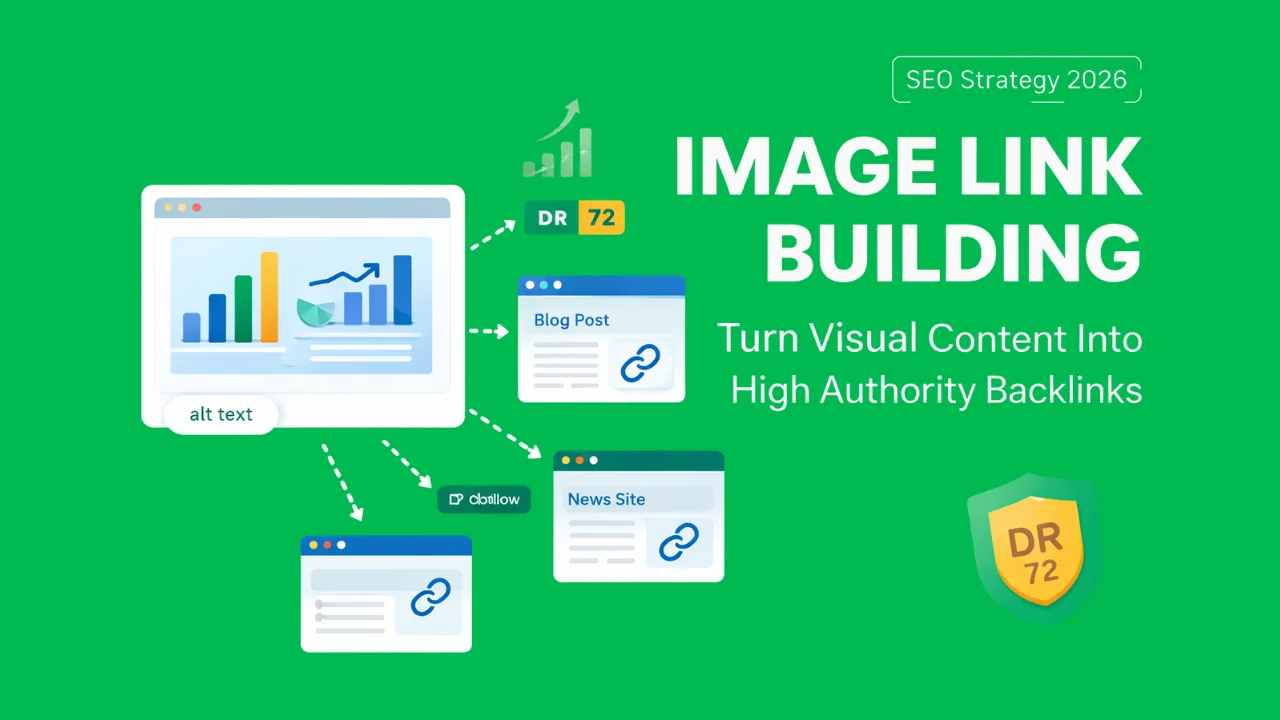
Image link building helps you earn backlinks using visual assets. Instead of relying only on guest posts, you attract links through images.
When bloggers use your infographic, logo, or chart, they often add a source link. That source becomes a backlink to your content page.
This method works well for:
- Infographics
- Data visualizations
- Product screenshots
- Maps and research charts
- Logos and brand badges
Used correctly, image link building strengthens your backlink profile and increases referring domains. It also builds brand visibility across multiple websites.
What Image Link Building Means
Image link building is the process of earning backlinks through images placed on other websites.
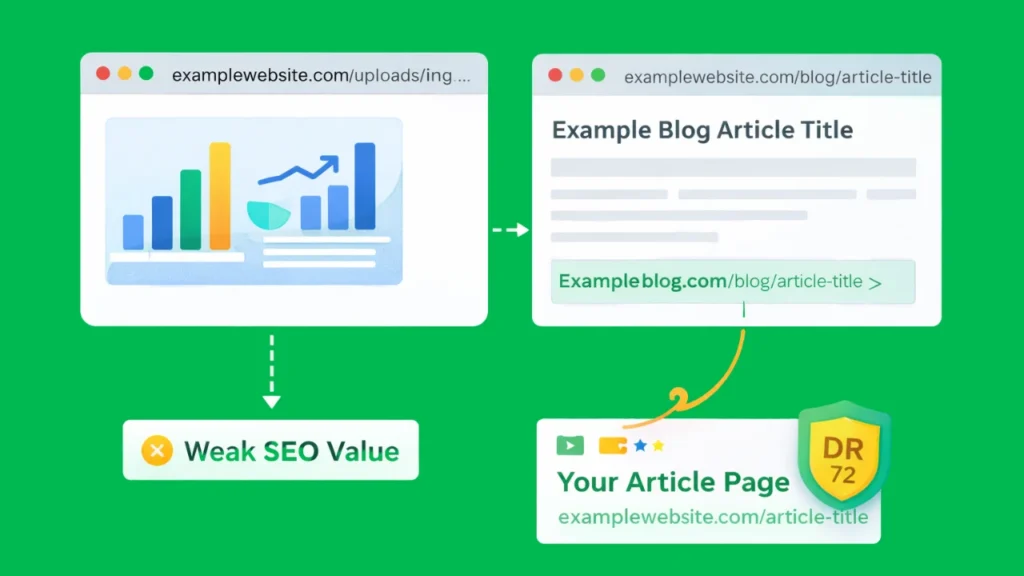
When someone embeds your image, they link back to your site as the source. That link may point to:
- The image file URL
- Or the actual content page
The second option is stronger for SEO.
Unlike text links inside articles, image backlinks often come from:
- Blog posts
- News articles
- Tutorials
- Industry resource pages
Search engines treat these as standard backlinks when properly attributed.
How Image Backlinks Work in SEO
Search engines crawl both image URLs and page URLs. However, links to the page pass stronger contextual signals.
Key factors include:
- Alt text relevance
- Surrounding content context
- Dofollow status
- Anchor text placement
If a website links directly to your .jpg or .png file, it creates a dead end.
A better approach is requesting the link to point to the main article page.
This ensures:
- Better internal linking flow
- Higher page authority consolidation
- Stronger ranking signals
Image backlinks SEO value depends on relevance, authority, and placement inside content.
Types of Visual Assets That Earn Links
Not every image earns links. Certain formats naturally attract citations.
Infographics and Data Visualizations
Infographics summarize research in visual format. Bloggers often embed them with credit links.
Effective formats include:
- Statistics charts
- Industry growth graphs
- Comparison tables
- Survey result visuals
Add embed code below the infographic to simplify attribution.
Original Research Charts and Maps
Custom maps and data graphics perform well.
Examples:
- Regional market maps
- Industry trend graphs
- Keyword research visual summaries
These visuals work best when backed by original data.
Logos, Badges, and Awards
Websites using your brand logo should provide attribution.
Opportunities include:
- Featured in lists
- SaaS partner badges
- Media mentions
Monitoring logo usage helps reclaim missed backlinks.
Product Photos and Screenshots
Tutorial sites often use screenshots.
Common cases:
- Software walkthroughs
- Case studies
- Tool comparisons
When credited properly, these placements generate consistent backlinks.
Reverse Image Search for Link Reclamation
Many websites use images without adding proper credit. You can reclaim those missed backlinks.
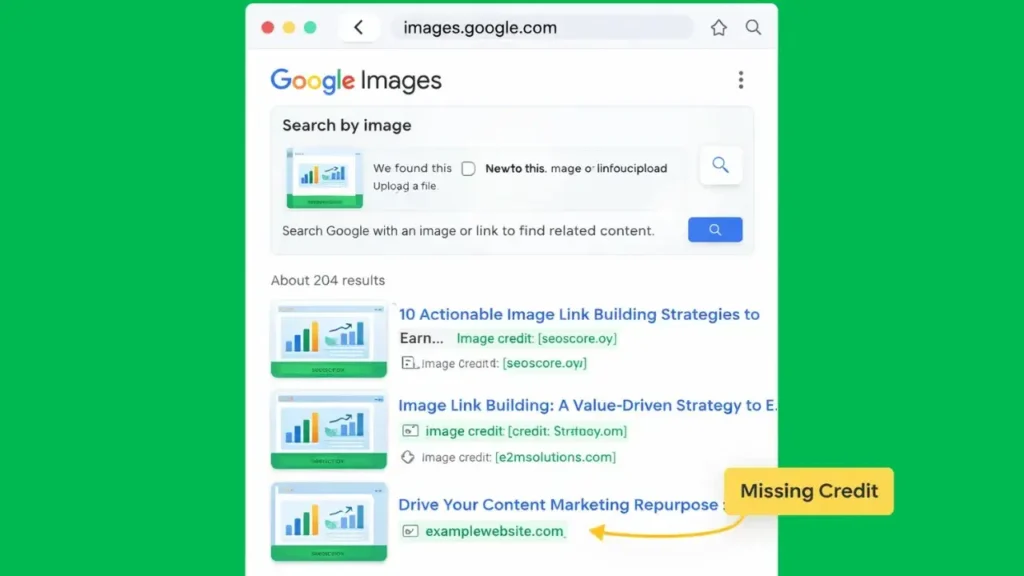
Use reverse image search to find where your visuals appear.
Steps:
- Upload image to Google Images.
- Check websites using your asset.
- Identify pages missing attribution.
- Filter domains by traffic and relevance.
- Prioritize strong referring domains first.
Focus on websites with:
- Real organic traffic
- Relevant industry context
- Editorial content placement
Track opportunities in a spreadsheet with:
- URL
- Domain rating
- Contact email
- Status of outreach
Reclaiming uncredited visuals is one of the easiest ways to grow links consistently.
Outreach Strategy for Image Attribution
Outreach should be direct and respectful. The goal is proper source credit, not conflict.
Missing Credit Outreach Email
If your image appears without attribution:
- Thank them for using the visual.
- Politely request source citation.
- Provide correct page URL.
Keep the message short and clear.
Wrong URL Replacement Outreach
Sometimes websites link to the image file instead of the page.
In that case:
- Explain that the article provides context.
- Request update to the main content URL.
- Suggest natural anchor text within the paragraph.
This improves user experience and SEO value.
Logo and Brand Usage Requests
If your logo appears on partner or review sites:
- Confirm brand mention accuracy.
- Request a clickable source link.
- Ensure link points to homepage or relevant page.
Consistent monitoring protects brand authority.
Creating Embeddable Images for Backlinks
Make linking easy for publishers.
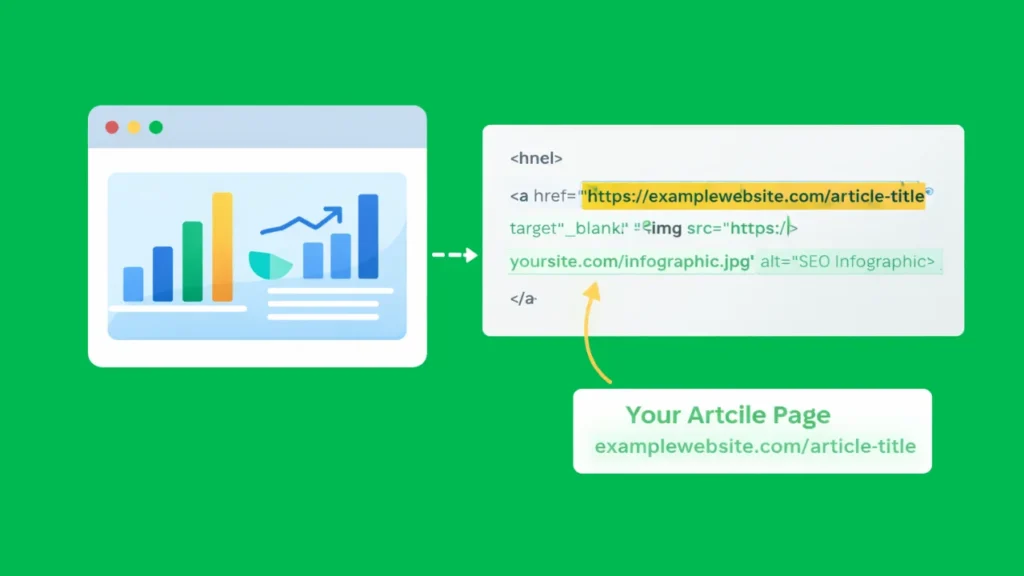
Under your infographic or chart, add:
- A short HTML embed code snippet.
- Pre-filled anchor text.
- A link to your content page.
Host the image on your own domain. Avoid third-party hosting platforms for important assets.
Best practices:
- Include brand name in anchor text.
- Keep embed code simple.
- Test link before publishing.
Embeddable visuals increase natural attribution rates.
Image Link Building Technical Setup
Strong results depend on clean technical structure. Host important visuals on your primary domain. Avoid relying on image sharing platforms for core assets.
Technical checklist:
- Optimized filename with descriptive keywords
- Clear alt text aligned with topic
- Proper title attribute when useful
- Compressed file size for faster loading
- Responsive images using srcset
- Lazy loading for better Core Web Vitals
Always direct links to the content page, not the raw image URL. This protects authority flow and strengthens page relevance.
Use an image sitemap if you publish many visuals. Add ImageObject schema when appropriate for discovery.
A CDN can improve load speed and reduce server strain. Faster pages support stronger SEO signals.
Distribution Channels for Visual Links
Creating visuals is only part of the process. Distribution determines how many links you earn.
Image Sharing Websites
Some image sharing websites allow backlinks. Be selective and avoid spammy directories.
Look for:
- Real traffic
- Niche relevance
- Editorial moderation
Do not depend on free image submission sites alone.
Social Platforms
Visual platforms can drive exposure.
Examples include:
- Pinterest boards with source link
- Reddit communities sharing research visuals
- Industry groups discussing data graphics
While social links are often nofollow, they create visibility.
Bloggers and Journalists
Outreach to bloggers who cover similar topics.
Pitch:
- Original data charts
- Updated statistics visuals
- Industry trend graphics
Pair visuals with short context summary for better acceptance.
Avoiding Spammy Image Submission Backlinks
Not all image backlinks are helpful.
Avoid:
- Automated image submission backlinks
- Low quality directories with no traffic
- Websites unrelated to your niche
Before outreach, check:
- Organic traffic level
- Content quality
- Relevance to your topic
- Outbound link profile
Quality matters more than quantity.
Licensing and Copyright Protection
Visual assets must follow proper licensing rules.
Before publishing any graphic:
- Confirm ownership of data.
- Check stock image usage rights.
- Review AI image platform policies carefully.
- Avoid copyrighted elements without permission.
If needed, add a light watermark. Watermarks can discourage unauthorized use but reduce embed appeal.
You can also monitor image usage regularly. Reverse image search helps detect uncredited placements. Protecting your visuals ensures long term authority growth.
Measuring Performance of Image Backlinks
Tracking performance keeps strategy focused.
Monitor:
- New referring domains monthly.
- Dofollow versus nofollow ratio.
- Anchor text diversity.
- Traffic from visual placements.
- Placement inside content body.
Check whether links point to page URL or image file URL.
Strong signals include:
- Contextual placement inside article.
- Relevant anchor text.
- Topical match with your content.
Consistent tracking improves future asset planning.
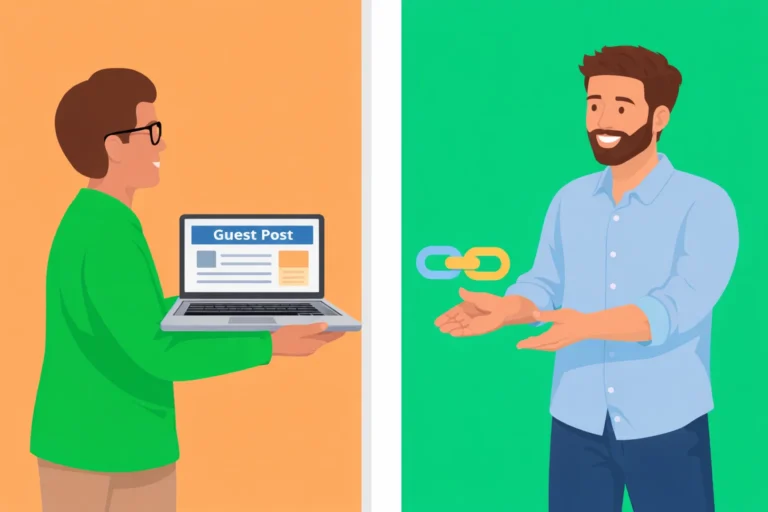
Image Link Building Versus Guest Posting
Both methods earn backlinks. Their structure and scalability differ.
Guest posting requires:
- Writing full articles.
- Securing editorial placement.
- Negotiating with publishers.
Visual assets require:
- Strong design.
- Clear attribution system.
- Outreach focused on credit.
Image link building often scales faster when visuals provide data value. Guest posting offers stronger contextual control. Combining both strategies creates balanced link growth.
Common Mistakes to Avoid
Small errors reduce results.
Common mistakes include:
- Linking only to the image file URL.
- Ignoring alt text optimization.
- Submitting to irrelevant image directories.
- Using identical anchor text repeatedly.
- Failing to track reclaimed opportunities.
Avoid shortcuts and low quality networks.
Advanced Scaling Framework
To scale results, treat visuals as assets.
Build a production calendar including:
- Monthly data charts.
- Industry statistic updates.
- Evergreen infographics.
Repurpose one asset into:
- Blog feature image.
- Social media graphic.
- Newsletter visual.
Combine keyword research with trending topics. Google Trends and Google News reveal fresh angles.
Create statistics pages that others cite frequently. These pages attract natural backlinks over time.
Frequently Asked Questions
Conclusion
Image link building works when visuals provide real value.
Focus on relevance, attribution, and technical precision.
Create strong assets.
Host them correctly.
Monitor usage consistently.
Outreach professionally.
Over time, image link building becomes a steady source of authoritative backlinks.