Backlink Profile, Meaning, Analysis, and How to Build a Strong One
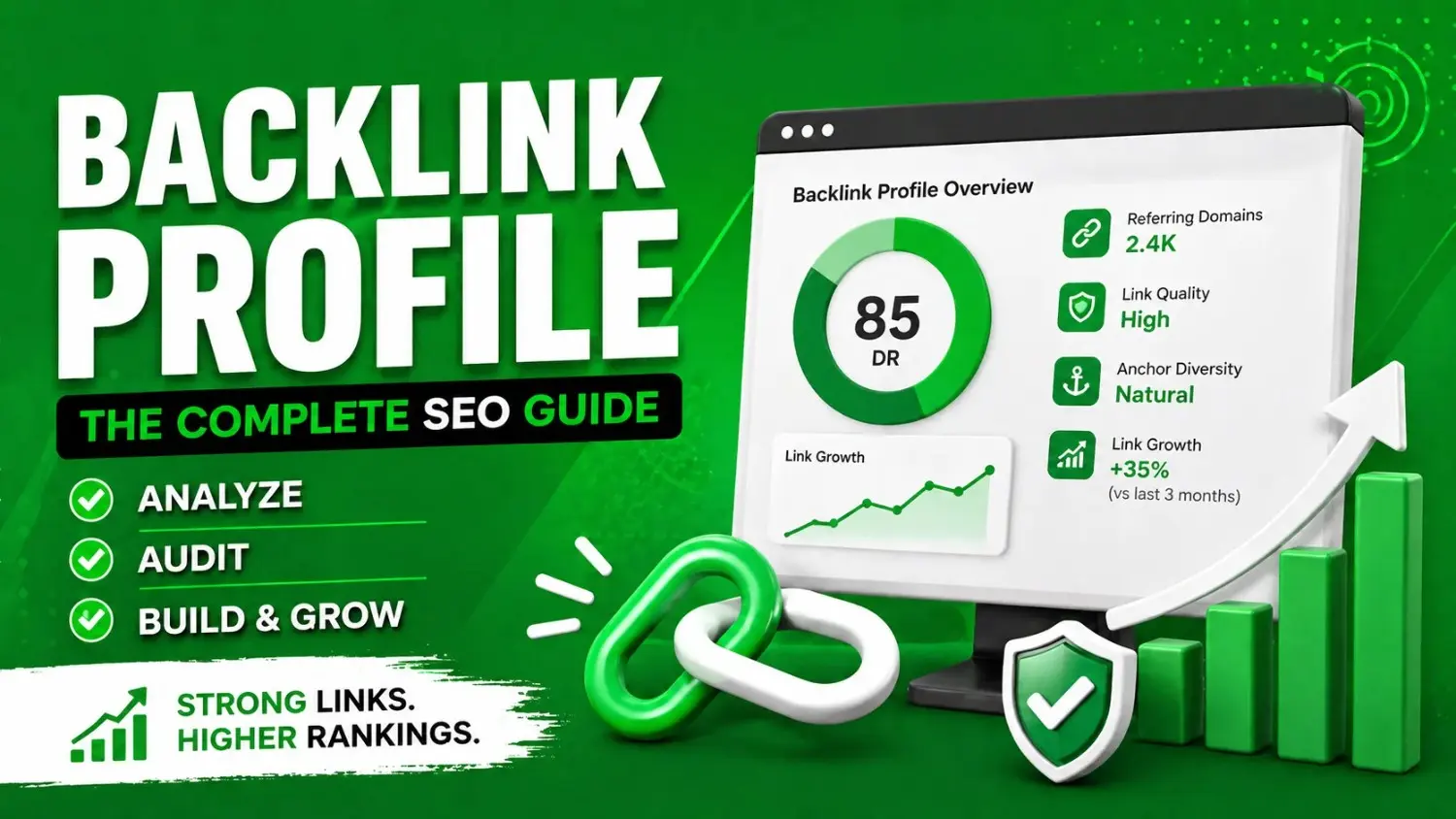
A backlink profile shows every external link pointing to your website.
It helps you understand link quality, referring domains, anchor text, relevance, and possible SEO risks. A clean link profile can support rankings, trust, and referral traffic.
A weak one can hold your site back, even with good content.
This guide explains the meaning, key signals, audit steps, and safe ways to build stronger links.
What Is a Backlink Profile and Why It Matters
A backlink profile is the full collection of inbound links from other websites.
These links may point to your homepage, service pages, blog posts, tools, or landing pages. Search engines use these links to understand trust, authority, and topic relevance.
A strong profile is not only about link count.
It also depends on:
- Referring domain quality
- Link relevance
- Anchor text distribution
- Dofollow and nofollow mix
- Link placement
- Link growth pattern
- Spam and toxic link signals
Think of it as your website’s link reputation.
If trusted, relevant websites link to you, search engines may see your site as more credible. If spammy sites link heavily, your profile can look risky.
For service businesses, this matters even more.
A clean link profile can support better rankings for commercial pages. It can also help users trust your brand before they contact you.
You can also connect this with your broader link building services strategy, so every link has a clear purpose.
Key Elements That Shape a Backlink Profile
A strong link profile depends on several signals working together. You cannot rely only on link count or domain rating.
Referring domains vs total backlinks explained
Many people track total backlinks. This metric alone can mislead. Referring domains show how many unique sites link to you.
- 50 links from 1 domain have limited value
- 50 links from 50 domains are much stronger
Search engines trust diversity across domains. It shows broader recognition and reduces manipulation signals.
Link quality and domain authority factors
Not every backlink helps rankings. A single link from a trusted site can outperform many weak links. Do not rely only on DR or DA.
Check:
- Real organic traffic on the site
- Content quality and relevance
- Outbound links on the page
- Context around the link
A high metric site with poor content still gives weak value.
Link relevance and niche alignment
Relevance is one of the strongest ranking signals. Links should come from sites related to your topic or audience. For example, a marketing blog linking to an SEO page makes sense.
A random niche link adds little value. Irrelevant links can dilute your authority over time.
Dofollow and nofollow link balance
Dofollow links pass authority. Nofollow links still bring traffic and natural signals. A healthy profile includes both.
If all links are dofollow, it can look unnatural. If most links are nofollow, authority growth slows. Focus on natural distribution instead of fixed ratios.
Anchor text distribution and diversity
Anchor text helps search engines understand your pages. But overuse of keywords creates risk.
A safe mix includes:
- Branded anchors
- Naked URLs
- Generic phrases
- Partial keyword anchors
- Limited exact match anchors
Natural profiles always look varied, not controlled.
Link placement and contextual value
Placement affects link strength. Links inside content perform better than sidebar or footer links.
Strong placements include:
- Inside paragraphs
- Surrounded by relevant text
- On pages with real traffic
Weak placements include:
- Footer sitewide links
- Comment sections
- Low quality directories
Context improves both SEO value and user trust.
Link velocity and growth patterns
Link velocity shows how fast you gain backlinks. A natural profile grows steadily over time. Sudden spikes can signal paid or manipulative links.
Healthy growth patterns include:
- Consistent monthly link acquisition
- Links from varied sources
- Mix of new and returning domains
Monitor this trend using tools like Google Search Console or Ahrefs. Steady growth builds trust and long term ranking strength.
What a Good Backlink Profile Looks Like
A strong link profile follows clear patterns. It looks natural, diverse, and relevant across all signals.
Characteristics of a strong backlink profile
A healthy profile is not built on shortcuts. It shows consistent growth and real value.
Key traits include:
- Links from relevant and trusted websites
- Mix of high and mid authority domains
- Balanced anchor text distribution
- Natural mix of dofollow and nofollow links
- Links pointing to different pages, not just homepage
- Steady link growth over time
You do not need thousands of links. A smaller number of high quality links can perform better.
Natural backlink profile vs manipulated profile
Search engines can detect patterns easily. A natural profile looks random and unstructured. A manipulated profile looks controlled and repetitive.
Natural signals:
- Different anchor types
- Links from various industries within your audience
- Mixed link placements
- Gradual link growth
Manipulated signals:
- Same anchor text repeated often
- Too many dofollow links only
- Links from similar type sites only
- Sudden spikes in backlinks
Your goal is to stay closer to natural patterns.
Backlink profile examples from real websites
Top websites follow similar trends. They do not rely only on high authority links.
Common patterns include:
- Majority links from mid or low DR sites
- Small percentage of very high authority links
- Strong diversity in referring domains
- Mix of branded and generic anchors
Even large sites get many links from smaller blogs. What matters is consistency and relevance. You can study competitors using tools like Ahrefs.
Look at:
- Their referring domains
- Anchor text patterns
- Link growth over time
- Pages getting most backlinks
This helps you build a realistic strategy instead of guessing.
What a Bad Backlink Profile Looks Like
A weak link profile shows clear problems. Search engines can detect these patterns quickly.
Signs of a weak backlink profile
A poor profile often lacks balance and relevance.
Common issues include:
- Very few referring domains
- Links from unrelated niches
- Repeated links from the same websites
- No variation in anchor text
- Most links pointing only to homepage
These signals reduce trust and limit ranking potential.
Toxic backlinks and spam signals
Toxic links come from low quality or risky sources. These can harm your SEO if ignored.
Watch for:
- Links from spam domains or link farms
- PBN backlinks with thin content
- Sites with malware or poor design
- High spam score or zero organic traffic
- Auto generated pages with many outbound links
A few bad links are normal.
But too many can weaken your overall profile.
Over optimization and risky anchor patterns
Anchor misuse is a common issue. Too many keyword anchors can trigger penalties.
Risky patterns include:
- Repeating exact match keywords
- Using money anchors in most links
- Lack of branded or generic anchors
- Same anchor across multiple domains
Search engines expect variation. A natural profile always includes mixed anchor types. If your anchors look forced, fix them early. It is easier to adjust now than recover later.
Backlink Profile Analysis Step by Step
You need a clear process to review links and spot issues fast. Follow these steps in order.

How to check backlink profile using tools
Start with reliable data sources.
Use:
- Google Search Console for basic link data
- Ahrefs, Semrush, or Moz for deeper metrics
Export your links.
Work with a clean list to avoid missing patterns.
Analyze referring domains and link sources
Review where links come from.
Check:
- Domain relevance to your niche
- Organic traffic trends
- Content quality on linking pages
- Country and language alignment
Focus on unique domains, not just link count.
Review anchor text distribution
Open the anchor report in your tool.
Look for:
- High share of branded anchors
- Healthy mix of generic and naked URLs
- Limited exact match anchors
If one keyword dominates, reduce its use in future links.
Evaluate backlink quality and placement
Open top linking pages manually.
Check:
- Link inside main content or not
- Number of outbound links on the page
- Page relevance to your topic
- Index status in Google
Ignore links on non indexed or thin pages.
Check backlink velocity and growth trend
View link growth over time.
Look for:
- Sudden spikes in short periods
- Long gaps with no links
- Consistent monthly growth
Match your pace to competitors in your niche.
Identify toxic backlinks and risks
Filter links with low quality signals.
Red flags:
- Spam domains with no traffic
- Irrelevant foreign sites
- Keyword stuffed anchors
- Link farm patterns
Mark risky links.
Plan removal or disavow only when needed.
Backlink Profile Audit Checklist
Use this checklist to review links quickly and avoid missing key signals.
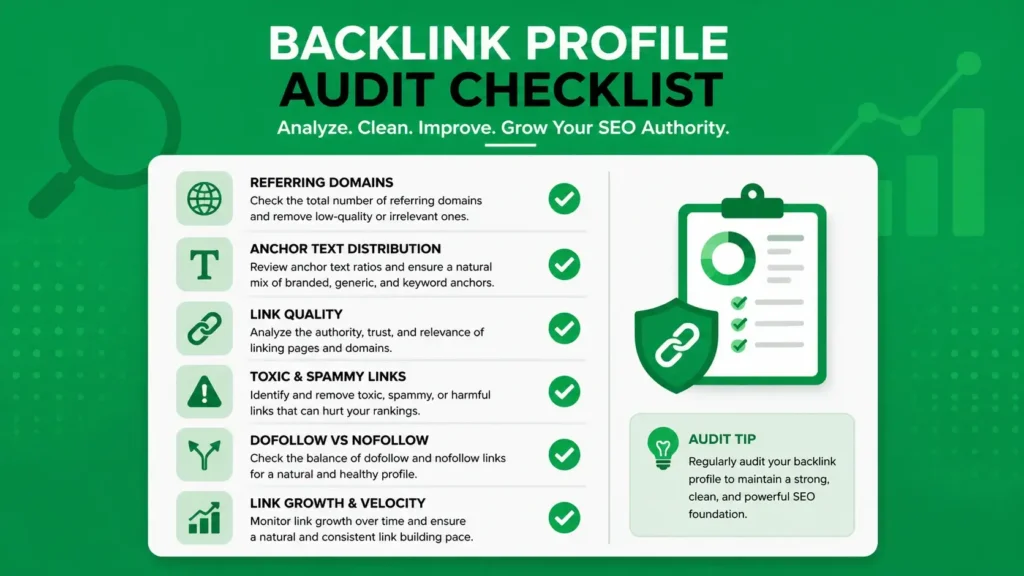
Quick audit checklist for SEO
Go through each point one by one.
- Referring domains quality
- Are links coming from relevant, real websites
- Do domains have organic traffic and active content
- Link relevance
- Do linking sites match your niche or audience
- Are links placed in relevant articles
- Anchor text distribution
- Is there a mix of branded, generic, and partial anchors
- Are exact match anchors limited
- Dofollow and nofollow balance
- Do you have both types of links
- Does the mix look natural
- Link placement
- Are links inside content or just in footer and sidebar
- Are links placed on pages with real value
- Backlink quality signals
- Check page quality and readability
- Review outbound link count on linking pages
- Spam and toxic links
- Identify links from PBNs, link farms, or spam sites
- Check spam score and traffic signals
- Link velocity
- Is growth steady over time
- Any sudden spikes or unnatural patterns
- Index status
- Are linking pages indexed in Google
- Non indexed links usually carry no value
This checklist helps you spot weak areas fast. Use it before starting any new link building campaign. It also helps you decide whether to clean, improve, or scale your link strategy.
How to Build a Strong Backlink Profile
You build a strong link profile with consistent, focused actions. Avoid shortcuts. Focus on quality and relevance from the start.
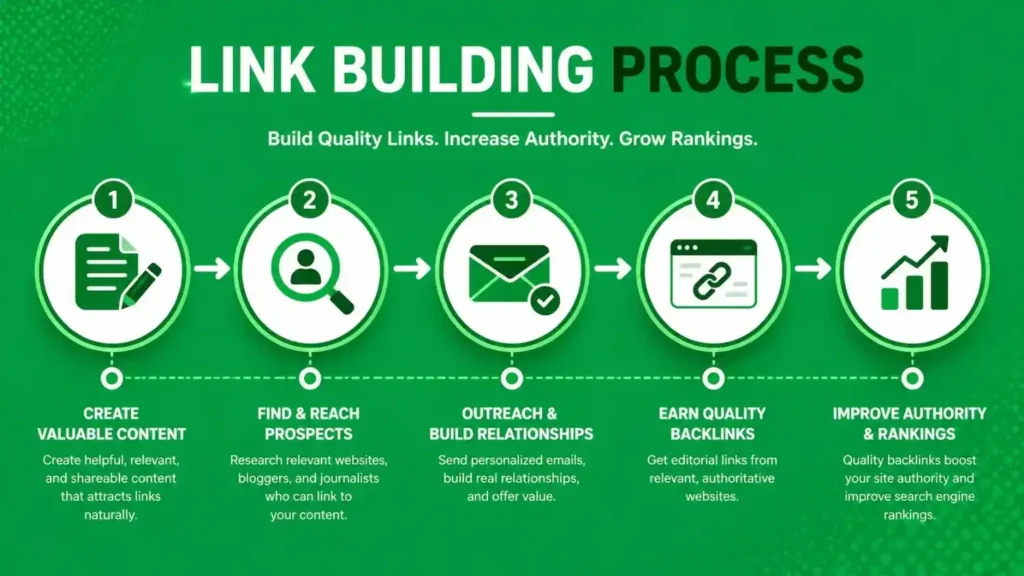
Create linkable assets that attract backlinks
Strong links start with strong content. Create assets that others want to reference.
Examples:
- In depth guides with clear structure
- Original data, surveys, or case studies
- Free tools or calculators
- Visual assets like charts or infographics
Content should solve real problems. If it adds value, links come naturally over time.
Use proven link building strategies
Do not rely on one method. Use a mix of strategies to keep your profile diverse.
- Guest posting on relevant websites
- Broken link building with replacement content
- Digital PR and journalist outreach
- Resource page link placements
- Niche edits on existing content
Each method brings different link types. This keeps your profile natural.
Build backlinks through outreach and relationships
Outreach works best when it feels real. Do not send generic emails.
Focus on:
- Personalized outreach messages
- Targeting sites in your niche
- Offering real value in content
- Building long term relationships
Sites that trust you will link again. That improves long term link growth.
Use profile backlinks carefully
Profile backlinks are easy to create. But they carry limited SEO value.
Use them for:
- Diversifying link types
- Building brand presence
- Creating foundational links
Avoid overuse. Too many low quality profile links can weaken your profile.
Diversify link types and sources
A strong profile includes many link types. This reduces risk and improves trust.
Include:
- Editorial backlinks from blogs
- Guest post links
- PR and media mentions
- Directory and resource links
- Social and forum links
Also link to different pages:
- Homepage
- Service pages
- Blog posts
- Linkable assets
This shows your whole site has value.
For a structured approach, align this with your link building services strategy so every link supports growth.
Backlink Profile for Different Page Types
Not every page needs the same type of links. Each page has a different goal, so link strategy should match.
Homepage backlink profile strategy
The homepage builds brand authority. Focus on trust signals, not aggressive keyword targeting.
Use:
- Branded anchors
- Naked URLs
- Mentions from PR, directories, and media sites
- High authority homepage links
Avoid heavy keyword anchors here. Keep it natural and brand focused.
Service and money page backlinks
Service pages drive conversions. They need relevant and contextual links.
Use:
- Partial match anchors
- Contextual anchors inside content
- Links from niche relevant websites
Avoid:
- Too many exact match anchors
- Low quality links pointing directly to money pages
Build slowly to avoid risk.
Blog content and linkable assets
Blog pages attract natural backlinks. They are easier to promote and scale.
Use:
- Informational anchors
- Generic anchors
- Natural contextual links
Focus on:
- High quality content
- Data driven posts
- Guides that others can reference
You can then pass authority internally to service pages.
For example, link from blog content to your link building services page using natural anchors. This helps distribute link value across your site.
Backlink Profile Benchmarks by Website Type
You need realistic expectations based on your website stage. Do not compare a new site with an established brand.
New website backlink profile expectations
New sites start with low authority. Focus on building a clean foundation first.
Expect:
- Few referring domains in early months
- Mostly low to mid authority links
- More branded and generic anchors
- Slow and steady link growth
Avoid aggressive link building early. Build trust before scaling.
Established website backlink profile
Older sites have stronger signals. They usually attract links naturally over time.
Expect:
- Higher number of referring domains
- Mix of high and mid authority backlinks
- Strong anchor diversity
- Links spread across multiple pages
At this stage, consistency matters more than speed. Keep improving quality and relevance.
Niche specific backlink profiles
Each industry behaves differently. Link patterns vary based on competition and audience.
Examples:
- SaaS sites rely on editorial and blog links
- Ecommerce sites gain links from reviews and listings
- Local businesses get directory and citation links
- Agencies rely on guest posts and PR mentions
Match your strategy with your niche. Do not copy another industry blindly. Study competitors in your space and follow similar patterns.
Common Backlink Profile Mistakes to Avoid
Small mistakes can weaken your entire link strategy. Fix these early to avoid long term issues.
Focusing only on backlink quantity
Many people chase numbers. More links do not always mean better rankings.
Problems:
- Low quality links dilute authority
- Irrelevant links confuse search engines
- Too many weak links slow growth
Focus on quality and relevance instead.
Ignoring anchor text distribution
Anchor text is often overlooked. This leads to unnatural patterns.
Common mistakes:
- Too many exact match anchors
- No branded anchors
- Repeating the same keyword
Keep anchors varied and natural. This protects your site from penalties.
Building links too fast
Rapid link building looks suspicious. Search engines expect gradual growth.
Risks include:
- Sudden spikes in backlinks
- Links appearing from similar sources
- Unnatural velocity patterns
Build links at a steady pace. Consistency builds trust over time.
Using spammy link building methods
Shortcuts can damage your profile quickly.
Avoid:
- Link farms and PBNs
- Automated backlink tools
- Bulk directory submissions
- Paid links from low quality sites
These methods may work short term. But they often lead to ranking drops later. Stick with safe, long term strategies.
How to Clean and Recover a Backlink Profile
Every site gets some bad links over time. The goal is to control risk, not chase perfection.
Identify harmful backlinks
Start with a focused review. Use tools like Google Search Console, Ahrefs, or Semrush.
Look for:
- Irrelevant domains with no topical match
- Sites with zero organic traffic
- Pages with thin or auto generated content
- Excessive outbound links on one page
- Repeated exact match anchors from many domains
Do not panic over a few spam links. Focus on patterns, not single URLs.
Remove or disavow bad links
Take action only when risk is clear.
Follow this order:
- Contact site owners and request removal
- If no response, prepare a disavow file
- Submit the file in Google Search Console
Keep your disavow list small. Overuse can remove useful signals. Use it mainly for toxic domains, not minor issues.
Rebuild with high quality backlinks
Cleaning alone will not improve rankings. You must replace weak links with stronger ones.
Focus on:
- Relevant editorial links
- Guest posts on real websites
- Links from pages with traffic
- Natural anchor usage
After cleanup, track changes over time. Recovery usually takes a few months. Keep building steadily to restore trust and growth.
Backlink Profile Tools and Resources
You need the right tools to track links and make decisions. Use a mix of free and paid options.
Free backlink profile checker tools
Start with tools that cost nothing. They give enough data for basic audits.
- Google Search Console shows top linking sites and pages
- It helps track new and lost links
- You can review anchor text and referring domains
Use it regularly. It shows how Google sees your links.
Paid backlink analysis tools
Paid tools give deeper insights. They help you scale your analysis.
Popular options:
- Ahrefs shows backlink data, anchors, and link growth
- Semrush offers backlink audit and toxicity score
- Moz provides domain authority and spam score
These tools help you:
- Analyze competitor links
- Track link velocity
- Identify toxic backlinks
- Find new link opportunities
Use one tool consistently. Switching tools often can confuse your analysis.
Backlink Profile vs Profile Backlinks
Many people confuse these two terms. They are related but not the same.
Difference between backlink profile and profile backlinks
A backlink profile is your full link portfolio. It includes all links pointing to your site. Profile backlinks are just one type of link.
They come from:
- Social media profiles
- Forum accounts
- Business directories
- User account pages
So, profile backlinks are a small part of the overall link profile. Do not treat them as a full strategy.
Role of profile backlinks in SEO
Profile backlinks have limited power. But they still serve a purpose.
Use them for:
- Creating foundational links
- Building brand presence online
- Adding diversity to your link types
They are easy to build.
That is why search engines give them less weight.
Avoid:
- Creating hundreds of profile links quickly
- Using exact match anchors in profiles
- Relying only on profile backlinks
Use them as support, not as your main strategy. Strong SEO results come from editorial and contextual links.
Conclusion Backlink Profile and Long Term SEO Growth
A strong backlink profile supports rankings, traffic, and long term growth. It is not about chasing numbers. It is about building trust through relevant and quality links.
Focus on:
- Getting links from real and trusted websites
- Keeping anchor text natural and varied
- Maintaining steady link growth over time
- Avoiding spammy and risky link methods
Review your links regularly. Fix issues early before they grow into bigger problems. Build links with purpose. Each link should add value, not just increase count.
If you follow a clean strategy, your backlink profile will grow naturally and support stable SEO performance over time.