Link Juice in SEO, How Authority Flows Through Links
Link juice plays a direct role in how pages rank. Every link passes value from one page to another. Some pages receive more authority because of how links connect. When authority flows well, important pages gain strength. When it leaks, rankings stall. This is why structure matters as much as backlinks.
Search engines follow links to understand importance. They also measure how value moves across a site. This flow explains why two similar pages rank differently. When you understand it, you can make better linking choices. You stop guessing. You build clear paths that search engines can follow.
What Is Link Juice
Link juice refers to the value passed through a link. When one page links to another, it transfers authority. That authority helps the target page rank.
This is not a metric you can see directly. It is a concept based on how search engines evaluate links. Google uses links to judge trust and importance.
A page with strong authority passes more value. A weaker page passes less. If a page links to many URLs, the value splits across them. That is why not all links help equally. Placement, relevance, and structure shape the outcome.
Link juice and link equity describe the same idea. Both explain how authority moves through links. Many SEOs use the informal term because it is easy to explain. Internal links pass value within your site. Backlinks pass value between websites. Both support SEO.
What Makes a Link Valuable
- Authority of the linking page
- Relevance between both pages
- Position inside the main content
- Number of outgoing links on the page
Links inside content usually carry stronger signals. Footer and sidebar links often carry weaker signals. Context matters.
Key Takeaway So Far
Authority flow matters more than raw link volume. Better structure improves results without new backlinks.
Link Juice vs Link Equity
Link juice and link equity describe the same idea. Both explain how authority passes through links. The difference is mostly language, not meaning. Link equity is the technical term. It comes from early PageRank concepts. SEO tools and documentation prefer this wording.
Link juice is an informal term. SEOs use it to explain link value in simple terms. Clients understand it faster. Search engines do not treat them differently. Google does not measure link juice as a separate metric. It evaluates links based on authority, relevance, and placement.
When a page links out, its link equity spreads. Each outgoing link receives a portion of that value. Pages with fewer outbound links pass stronger signals. This is why structure matters. Two sites can have the same backlinks. The one with better link equity distribution ranks higher.
For practical SEO work, the term does not matter. What matters is how authority flows. Control the flow, and rankings follow.
How Link Juice Works in SEO
Link juice moves through links in a predictable way. A page with authority passes value to the pages it links to. Search engines follow this flow to judge importance.
Not all pages start equal. Some pages gain authority through backlinks. Others depend on internal links to receive value.
When a strong page links to another page, authority transfers. That transfer helps the target page rank better. This is the core of link juice in SEO.
Page Authority and Link Juice Flow
Pages with higher authority pass stronger link juice. Authority comes from backlinks and internal links. A homepage usually holds the most value.
Category pages often act as distributors. They pass authority to deeper pages. Blog posts usually sit lower in the structure. If an important page receives no internal links, it stays weak. Even strong content can fail without link juice.
Outbound Links and Juice Distribution
Every outbound link splits link juice. More links mean less value per link. This applies to both internal and external links.
A page with ten outbound links passes less authority per link. A page with three links passes more. This is why linking needs control. Excessive outbound links dilute link equity. They also confuse search engines. Clear intent works better.
Relevance and Context
Relevance affects how link juice is treated. Links between related topics pass stronger signals. Random links pass less value. Contextual links inside content matter most. They help search engines understand relationships. Navigation links help structure but pass weaker signals.
Internal Links and Equity Flow
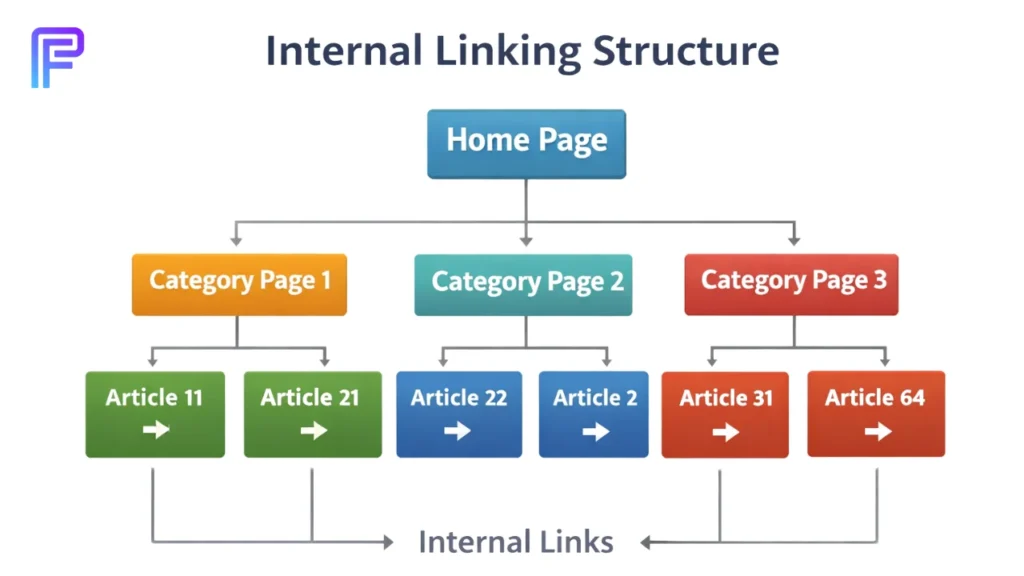
Internal links decide how authority moves inside a website. They connect pages and guide value toward priority URLs. Without internal links, strong pages cannot support weaker ones.
Search engines rely on internal links to understand structure. They use them to find important pages. They also use them to measure relevance.
Every internal link can pass value. Placement and context affect the strength of that transfer. Random linking weakens the signal.
Why Internal Linking Matters for SEO
Internal links give you control. Backlinks do not. You decide where authority goes. Strong pages can boost weaker pages. This helps new or low-visibility pages rank faster. It also improves crawl efficiency.
Sites with clean internal linking often perform better. They rank more consistently. They recover faster from updates.
Contextual Links vs Navigation Links
Contextual links sit inside the main content. They often carry stronger signals. They also add topical context.
Navigation links help structure the site. They appear on many pages. Their value is spread thin. Footer links often carry the least weight. They still help crawlability. They should not carry most priority links.
Orphan Pages and Lost Link Juice
Orphan pages have no internal links. Search engines struggle to find them. They receive almost no internal authority.
Even good content can fail as an orphan page. No internal links means no flow. Rankings stall. Fixing orphan pages is straightforward. Add contextual internal links. Use relevant anchor text.
Best Practices for Internal Link Placement
- Link from high-authority pages
- Use relevant anchor text
- Place links inside main content
- Avoid excessive links on one page
Internal linking works best with intent. Every link should have a reason.
External Links and Backlink Equity
External links move authority between websites. When another site links to yours, value transfers. Many SEOs call this backlink juice.
Not all backlinks help equally. Some pass strong value. Others pass very little. Search engines judge backlinks by quality, not count. A few strong links can outperform many weak ones. Relevance plays a major role.
What Affects Backlink Value
Several factors decide how much value a backlink passes.
- Authority of the linking domain
- Authority of the linking page
- Topical relevance
- Placement inside content
A link from a trusted site passes stronger signals. A link buried in a footer passes less. Context inside content matters most.
Domain Authority vs Page Authority
Domain authority reflects overall site strength. Page authority reflects one page’s value. Both can affect backlink impact.
A strong page on a weak site can still help. A weak page on a strong site may help less. Page-level signals often matter more. This is why placement matters. Links from ranking pages pass stronger signals. Links from thin pages rarely help.
Relevance and Backlink Signals
Relevance strengthens link juice. Links between related topics pass clearer signals. Unrelated links confuse search engines.
Topical relevance improves trust. It also improves ranking stability. Random backlinks carry higher risk. Backlink juice works best within topic boundaries. This supports long-term SEO growth.
Do Outbound External Links Reduce Your Authority
Outbound links do not hurt by default. They dilute focus when overused. Quality matters more than fear.
Linking to relevant, trusted sources is usually safe. It supports context and credibility. Too many outbound links weaken focus. Balanced linking keeps authority stable. Control matters more than avoidance.
Anchor Text and Link Juice
Anchor text helps search engines understand a link. It tells them what the linked page is about. This context affects how value is interpreted.
A link without context sends weaker signals. A clear anchor strengthens relevance. Overuse creates risk. Anchor text does not increase the amount of equity. It improves how that value is understood.
How Anchor Text Influences Meaning
Search engines read anchor text as a clue. They compare it with the target page content. Strong alignment improves trust.
Relevant anchors support ranking signals. Misleading anchors weaken them. Consistency matters. Anchor text works best when it fits naturally. Forced placement sends poor signals.
Types of Anchor Text
- Branded anchors
- Partial match anchors
- Generic anchors
- Naked URLs
Each type serves a purpose. Balanced use keeps your profile safe. Overuse of one type creates imbalance. Exact match anchors need restraint. Partial match anchors are often safer.
Internal vs External Anchor Usage
Internal anchors offer more flexibility. You control placement and wording. This helps guide internal authority.
External anchors need caution. You do not control most backlinks. Natural variation protects your profile.
Internal anchors support topical structure. External anchors support authority signals.
Common Anchor Text Mistakes
- Repeating the same keyword too often
- Linking without context
- Using vague phrases too often
- Ignoring relevance
These mistakes weaken link juice flow. They also affect ranking stability. Clean anchors reduce risk
Follow vs Nofollow Links
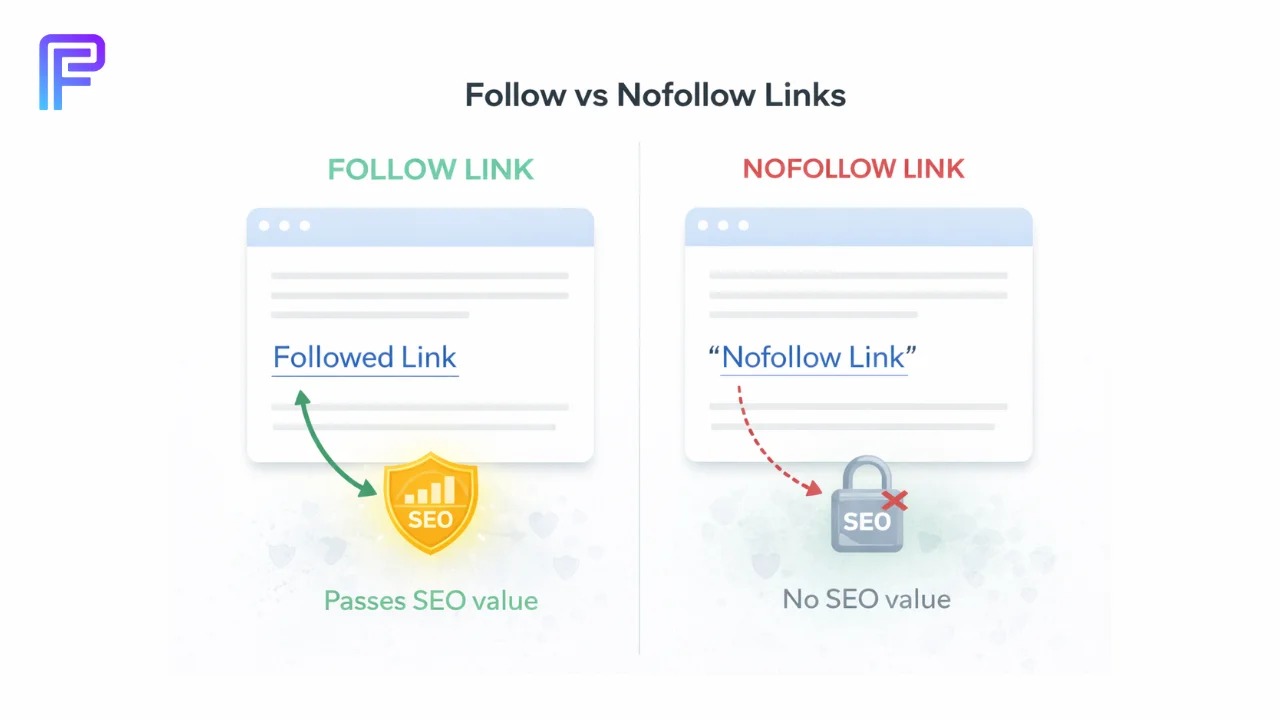
Follow and nofollow links affect how authority passes. They signal how search engines should treat a link. A follow link can pass equity.
A nofollow link limits direct transfer. Both can still have SEO value. Google treats nofollow as a hint. Context influences how it is handled.
What Follow Links Do
Follow links can pass authority by default. Most internal links are follow links. Search engines use follow links to rank pages. They strengthen internal structure.
Links inside content tend to carry stronger signals. Placement affects impact. Relevance supports results.
What Nofollow Links Do Today
Nofollow links limit direct equity transfer. They can still help discovery and trust. They are common in user-generated content.
Comments and forums often use nofollow. Sponsored links also use nofollow. This protects link integrity. Nofollow links can bring traffic. They can also support brand visibility. Indirect SEO value still exists.
Sponsored and User-Generated Links
Sponsored links should not pass ranking signals. Search engines expect proper tagging. User-generated links vary in quality. Nofollow reduces risk and protects your site. Correct attributes keep your link profile clean and stable.
When to Use Nofollow Internally
Internal nofollow use should be rare. Most internal links should pass link juice. Blocking authority flow weakens structure.
Use nofollow only when needed. Examples include login pages. Priority pages should stay follow.
Link Juice Distribution Across a Website
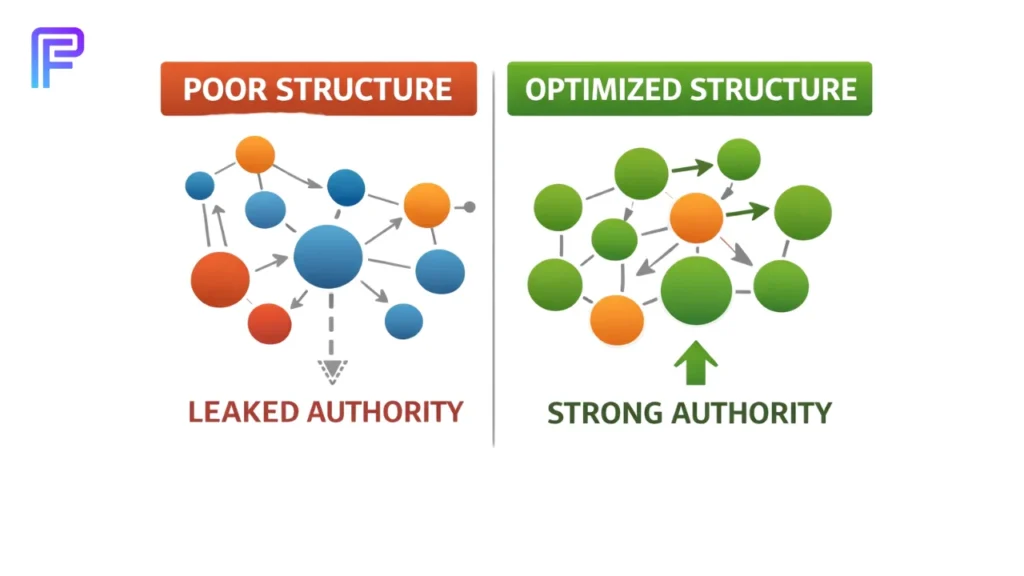
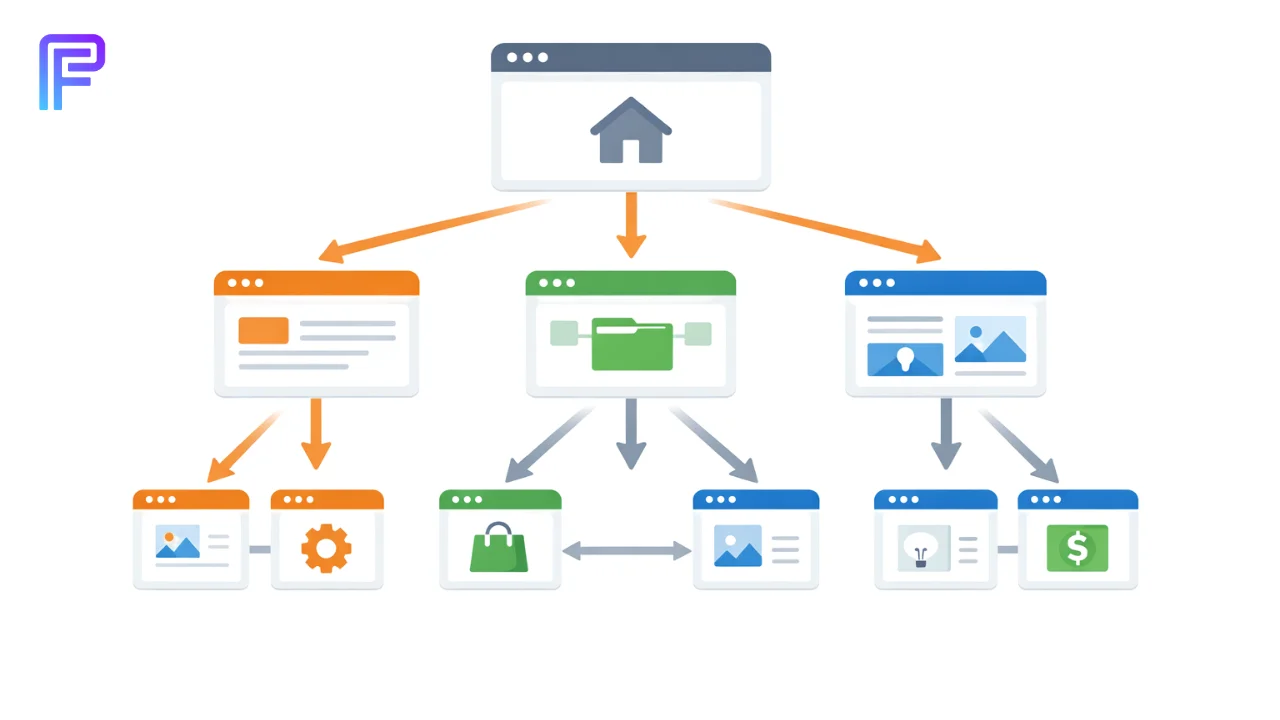
Authority does not spread evenly across a site. Some pages hold more value than others. Structure decides where that value goes.
The homepage often receives the most authority. It attracts strong backlinks. It also links to many internal pages.
Category pages often distribute value deeper. Blog posts often sit further down. If structure is weak, value gets wasted.
Homepage Authority and Internal Flow
The homepage is often the strongest page. Internal links decide how that power spreads. Linking from the homepage can boost priority pages. Random links dilute focus. Homepage links should support site goals. Every link should serve a clear purpose.
Category Pages as Authority Bridges
Category pages sit between the homepage and content. They pass value efficiently. They group related topics. Well-linked category pages often rank easily. They also help child pages rank. Weak category pages block flow. They act as dead ends.
Blog Pages and Authority Leakage
Blog posts often receive backlinks. They also link out frequently. This can cause authority loss. Without internal links, blog value leaks out. Service and money pages stay weak. Internal links should connect blogs to priority pages. Contextual links work best.
Link Depth and Crawl Depth
Pages deeper in structure often receive less authority. Each click reduces value. Important pages should stay within three clicks. This improves crawlability and ranking speed. Deep pages often struggle due to low internal equity.
Link Equity Sculpting
Link equity sculpting means guiding authority to key pages. It focuses on control, not manipulation.
In the past, SEOs tried to force flow using nofollow. That approach no longer works well. Modern control relies on structure, relevance, and hierarchy.
Old Sculpting Methods That Failed
Early sculpting relied on nofollow. SEOs blocked internal pages to “save” equity. Google changed how nofollow works. Blocking did not redirect value as expected. Excessive internal nofollow caused confusion and weaker structure.
Safe Ways to Guide Equity Today
Modern control uses smart linking. It uses fewer, stronger internal links. Priority pages receive more internal links. Low-value pages receive fewer. Navigation should support hierarchy. Contextual links should support relevance.
Page Priority and Authority Control
Not all pages deserve equal attention. Some pages drive revenue or conversions. Others support depth. Identify priority pages first. Then link to them from strong pages. Authority control needs audits and updates. Static structures decay over time.
When Control Becomes Risky
Too many internal links dilute value. Forced linking weakens relevance. Automation often causes problems.
If links feel unnatural, search engines notice. User experience also suffers. Balance matters.
Good sculpting feels invisible. Users find what they need easily. Search engines follow the same paths.
Link Juice Loss Scenarios
Authority can leak without notice. Many sites lose value through small technical issues. These problems slow rankings over time.
Loss often comes from neglect. Broken paths confuse search engines. Authority never reaches priority pages.
Broken Internal Links
Broken links stop flow. Search engines hit dead ends. Users lose trust. Every broken link wastes authority. It also harms crawl efficiency. Regular audits prevent this loss.
Fixing broken links restores flow. It strengthens internal structure. Rankings stabilize.
Redirect Chains and Authority Loss
Redirects pass value, but not fully. Each step weakens the signal. Long chains cause heavy loss. A direct 301 redirect works best. Multiple redirects reduce equity. They also slow crawling. Clean redirect paths protect authority. They keep signals strong. They improve indexing speed.
Excessive Outbound Links
Too many outbound links dilute link juice. Each link receives less value. Focus disappears.
Outbound links should add context. They should support content intent. Random links weaken authority.
Pagination and Filter Pages
Pagination spreads authority thin. Filters create duplicate paths. Search engines struggle to choose. Improper handling causes equity loss. Important pages receive less value. Indexation suffers. Use clear pagination signals. Limit crawl access to filters. Protect link equity flow.
Orphaned and Low-Value Pages
Orphan pages receive no internal value. Search engines ignore them. Low-value pages drain authority away from priority pages. Audit and prune regularly. Link useful pages properly. Remove what adds no value.
Technical SEO and Link Juice
Technical SEO affects how authority moves and survives. Even strong links fail if search engines cannot crawl pages. Structure and accessibility decide real impact.
Search engines need clear paths. They follow links to discover and rank pages. Technical issues block that flow.
Crawl Budget and Flow
Crawl budget limits how often pages are visited. Wasted crawl paths reduce efficiency. Link juice fails to reach priority pages.
Too many low-value URLs drain attention. Faceted navigation causes noise. Clean structure improves crawl focus.
Important pages should be easy to reach. Fewer clicks improve visibility. Authority flows faster.
Indexation and Equity
Only indexed pages pass value forward. Non-indexed pages break the chain. Authority stops there.
Pages blocked by robots.txt do not help. Noindex pages should be used carefully. Mistakes here waste equity.
Check index status often. Fix coverage issues early. Stable indexation protects link flow.
Canonical Tags and Signals
Canonical tags guide search engines. They show the preferred version of a page. Correct use consolidates link equity.
Incorrect canonicals split authority. Signals get confused. Rankings drop silently. Always align canonicals with internal links. Mixed signals weaken trust. Consistency matters.
JavaScript and Link Discovery
Search engines can render JavaScript. Rendering still takes time and resources. Delays affect link discovery.
Links hidden behind scripts may be ignored. Critical links should load in HTML. This ensures reliable crawling. Test rendered pages regularly. Confirm links are visible. Protect link juice flow.
Site Speed and Internal Linking
Slow pages reduce crawl efficiency. Fast sites get crawled deeper. Internal links get processed faster. Authority distribution improves.
Technical health supports link strategy. Both must work together. Ignoring one weakens the other.
Relevance, Entities, and Internal Linking
Authority works best when content is related. Search engines compare topics between linked pages.
Relevant links pass clearer signals. Unrelated links weaken context.
Topical Relevance and Strength
Pages covering similar subjects reinforce each other. Their links confirm topical focus. Search engines trust this pattern.
A finance page linking to finance content works well. Random cross-topic links weaken clarity. Context always matters.
Strong topical relevance improves link juice quality. It helps pages rank for related queries. This effect compounds over time.
Entity-Based Internal Linking
Search engines recognize entities, not just keywords. Entities represent concepts and relationships. Internal links help connect them.
Linking between entity-related pages strengthens context. It signals subject depth. It also improves crawl understanding.
Entity-based linking avoids over-optimization. It relies on meaning, not repetition. This approach scales safely.
Content Hierarchy and Flow
Content hierarchy guides where authority should go. Core pages should receive the most internal links. Supporting pages should link upward.
Clear hierarchy prevents authority loss. It keeps link juice focused. Search engines prefer organized structures.
Contextual Placement Inside Content
Links placed inside relevant paragraphs work best. They provide clear context. They support intent. Random links inside unrelated sections weaken signals. Placement affects interpretation.
Precision improves outcomes. Each contextual link should answer a need. User intent matters. Search engines follow user logic.
How to Find Links Pointing to Your Site
Knowing where links come from helps manage authority. It shows which pages pass value and which pages need support.
Using SEO Tools to Find Backlinks
SEO tools list websites linking to your site. They show linking pages and anchor text. They also show link strength.
These tools help identify strong backlinks. They also reveal low-quality links. Regular checks prevent problems. Backlink reports show patterns. Patterns help improve strategy. Data guides action.
Finding Pages That Link to a Specific Page
Some pages attract most backlinks. Others receive none. This imbalance affects distribution. Use page-level reports to spot gaps. Then add internal links from strong pages to weak pages.
Using Google Search Operators
Google can show linking pages. Search operators help find public links. They are useful for quick checks. Results are not complete. They still show context. They help validate tool data.
Use operators carefully. They support audits. They do not replace tools.
Identifying Internal Linking Gaps
Some pages receive no internal links. These pages stay weak. They struggle to rank. Crawl tools reveal orphan pages. They also show deep pages. Both need attention. Fixing gaps restores flow. It improves crawl paths. Link juice reaches priority pages.
Link Value Checker Tools
No tool measures Google’s exact numbers. Tools estimate authority using link data. They help identify patterns, not exact values.
What These Tools Measure
Tools measure link equity signals. They look at backlink profiles. They analyze internal link structure.
Common metrics include page strength and link counts. Some show link flow diagrams. Others highlight orphan pages.
These metrics reflect relative strength. They help compare pages. They are not ranking guarantees.
Limitations of These Metrics
No tool sees Google’s full data. Estimates differ across platforms. Numbers should not be taken literally.
High scores do not always mean high rankings. Context and relevance still matter. Structure affects outcomes.
Over-reliance causes poor decisions. Metrics should guide, not control. Judgment remains essential.
How to Use Tool Data Correctly
Use tools to spot weak pages. Identify pages with strong authority. Then plan internal links.
Compare pages within the same site. Relative differences matter more. Absolute scores matter less.
Track changes over time. Look for improvement trends. Ignore small fluctuations.
Common Authority Flow Mistakes
Many sites lose rankings due to simple problems. Most issues come from poor structure or over-optimization.
Too Many Links on One Page
Each link splits link juice. Too many links reduce value per link. Important pages receive less authority. Pages filled with links confuse search engines. They also hurt user experience. Focus matters. Link only where it helps. Remove unnecessary links. Keep intent clear.
Ignoring Internal Linking
Some sites rely only on backlinks. They forget internal links. This wastes existing authority.
Strong pages should support weak ones. Without internal links, this never happens. Growth slows. Internal linking is controllable. Backlinks are not. Ignoring it limits results.
Linking Without Relevance
Links without topical relevance pass weaker signals. They confuse context. Search engines notice mismatches.
Random links weaken trust. They also dilute meaning. Relevance protects authority. Always link related content. Support user intent. Let context guide placement.
Wasting Value on Low-Value Pages
Not all pages deserve authority. Some pages add little value. They drain link juice. Examples include tag pages and thin content. Too many links point to them. Priority pages suffer.
Audit low-value pages. Reduce internal links to them. Protect key URLs.
Overusing Exact Match Anchors
Repeated anchors raise red flags. They look unnatural. They increase risk.
Variation keeps anchors safe. Natural language works better. Balance improves stability.
Anchor text should be read naturally. SEO comes second. Clarity comes first.
How to Optimize Authority Flow Step by Step
Optimization starts with clarity. You need to know which pages matter most. Everything else supports those pages. This process is practical. It does not rely on guesses. Each step improves authority flow.
Step 1: Identify High-Authority Pages
Some pages already have strong equity. These pages attract backlinks. Use backlink data to find them. Use them to support priority pages.
Step 2: Define Priority Pages
Not all pages deserve equal attention. Some pages drive traffic or conversions. These are priority pages.
List service pages and key categories. Include pages with ranking potential. Exclude low-value content.
Priority pages should receive more internal links. This strengthens their authority. It improves ranking consistency.
Step 3: Add Contextual Internal Links
Contextual links pass the strongest link juice. They sit inside relevant content. They support user intent.
Link from strong pages to priority pages. Use natural anchor text. Match the topic clearly.
Avoid adding links without reason. Every link should help the reader. Search engines follow the same logic.
Step 4: Fix Orphan and Deep Pages
Orphan pages receive no value. Deep pages receive little value. Add internal links and reduce unnecessary depth.
Step 5: Reduce Low-Value Links
Too many links dilute link juice. Low-value pages drain authority. This weakens priority pages.
Reduce internal links to thin content. Limit tag and filter pages. Keep the structure clean.
Pruning improves focus. Authority flows where it matters. Rankings respond faster.
Step 6: Monitor and Adjust
Link structures change over time. New pages alter authority flow. Old links break.
Audit internal links regularly. Track performance changes. Adjust based on results.
Link juice optimization is ongoing. Static sites lose efficiency. Active maintenance keeps control.
Link Juice in 2026 SEO
Link juice still matters in 2026. Search engines still rely on links to judge importance and trust.
What changed is how links are evaluated. Raw volume matters less. Structure and relevance matter more.
Sites with clear internal linking perform better. They guide authority with intent and rank more consistently.
Why Links Still Influence Rankings
Links show relationships between pages. Search engines use them to map the web. No other signal replaces this fully.
Content quality matters, but links confirm value. User signals support rankings. Links still validate importance.
Even advanced systems rely on link signals. They help reduce noise. They improve confidence in results.
Internal Linking Has Gained More Weight
Internal links are fully controllable. Search engines reward clean structures. Strong internal linking supports topical authority and entity relationships.
Relevance Beats Quantity
Search engines evaluate context closely. Relevant links pass stronger signals. Unrelated links fade in impact.
User Experience and Link Flow
User paths influence crawling. Pages users visit often get crawled more. Link juice follows those paths.
Clear navigation helps users and bots. Confusing structures block flow. UX and SEO now overlap more.
Internal links should feel natural. Forced links hurt usability. Search engines notice this.
What Still Does Not Work
Blocking links to control authority fails. Excessive nofollow weakens structure. Automation causes patterns. Link farms carry risk. Low-quality backlinks fade quickly. Sustainable linking wins.
Frequently Asked Questions
Conclusion
Link juice explains how authority moves through links. It shows why structure affects rankings.
It also explains why some pages outperform others. Strong internal linking controls link juice flow. Relevant backlinks strengthen it further. Technical health keeps it intact.
In 2026, link juice still matters. Not through tricks. Through clarity, relevance, and structure. Sites that guide authority intentionally perform better. They rank with fewer backlinks. They stay stable over time. Link juice is already on your site. The real task is directing it correctly.