Link Building Strategies: 15 Proven Tactics for 2026
The right link building strategies can move your site up fast. The wrong ones can get it penalized. This guide covers 15 proven link building strategies that work in 2026. You will learn what each tactic does and when to use it. You will also learn how to choose the best strategy for your site. You will learn the top SEO link building techniques and best practices. We cover safe white-hat methods only, plus how to measure results. It is built for site owners, marketers, and anyone growing organic traffic. Pick two or three tactics and run them with focus.
What Is a Link Building Strategy?
A link building strategy is your plan to earn backlinks on purpose. It is more than a list of random tactics. A strategy defines your goals, target sites, and methods. It also sets how you will track progress.
Most people confuse tactics with strategy. A tactic is one action, like guest posting. A strategy decides which tactics to use and why. It matches your niche, budget, and timeline.
A clear strategy keeps your links consistent and safe. It stops you from chasing low-value links that waste time. Think of it as the roadmap, and tactics as the steps.
Strategy vs Tactic vs Technique vs Best Practice
People use these four words as if they mean the same thing. They do not. Knowing the difference sharpens your whole plan.
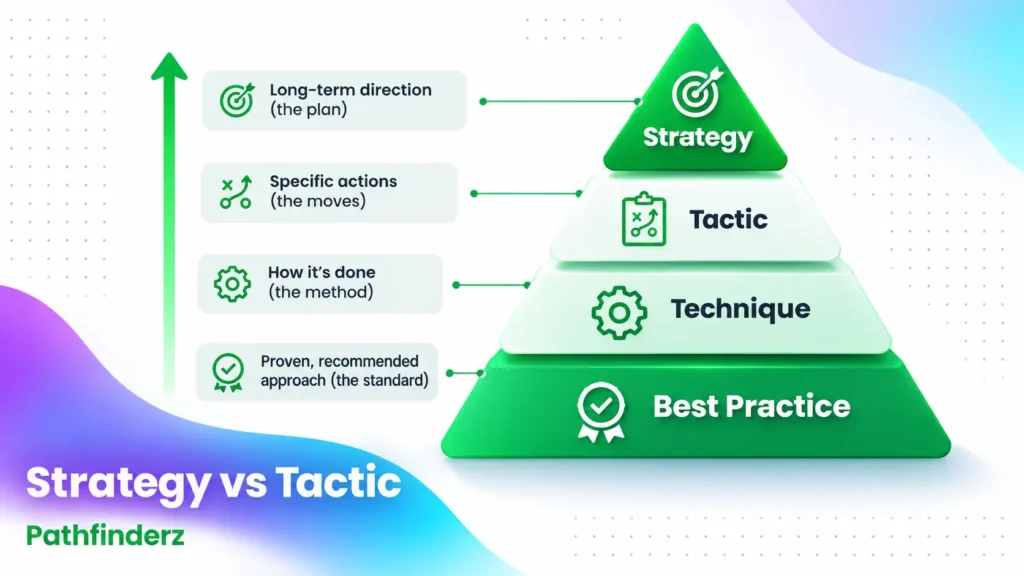
- Strategy. Your overall plan to earn links and hit a goal.
- Tactic. A single method you use, like guest posting.
- Technique. The specific way you run a tactic, like a pitch angle.
- Best practice. A rule that keeps every tactic safe and effective.
Here is a simple example. Your strategy is to build topical authority. Guest blogging is the tactic. Pitching data-led posts is the technique. Keeping links relevant is the best practice.
Why You Need a Link Building Strategy
A strategy turns scattered effort into real results. Random links rarely move rankings on their own. A planned approach builds authority that lasts.
Here is why a strategy matters.
- Focus. You spend time on tactics that fit your niche.
- Safety. You avoid spammy links that risk penalties.
- Consistency. You earn links at a steady, natural pace.
- Measurement. You know which tactics actually work.
Without a plan, link building becomes guesswork. You chase links that do not help your goals. A strategy keeps every link tied to a clear purpose.
15 Best Link Building Strategies
These are the 15 most effective link building strategies for 2026. Each one is safe, proven, and still works today. Start with the ones that fit your niche and skills.
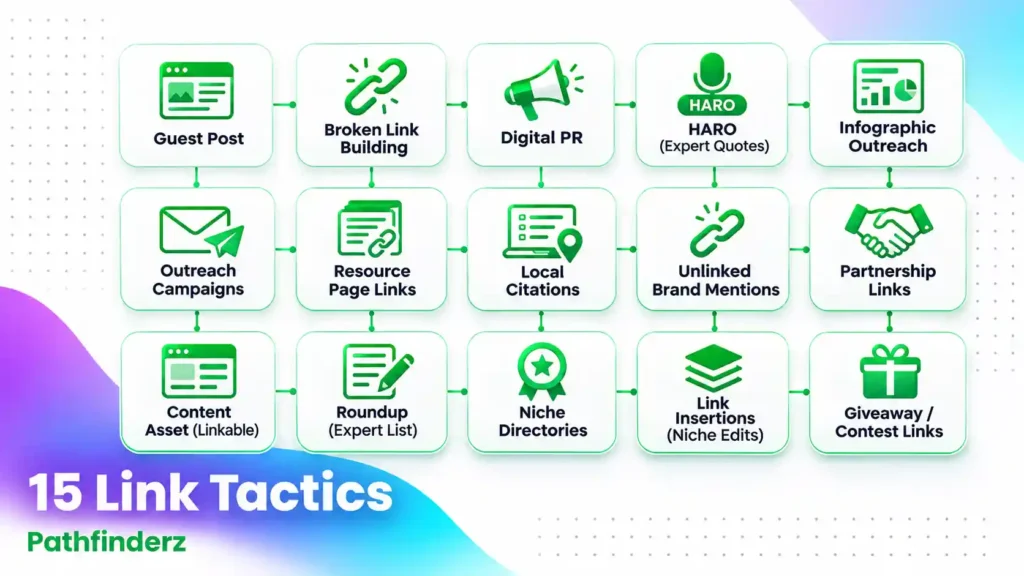
1. Guest Blogging
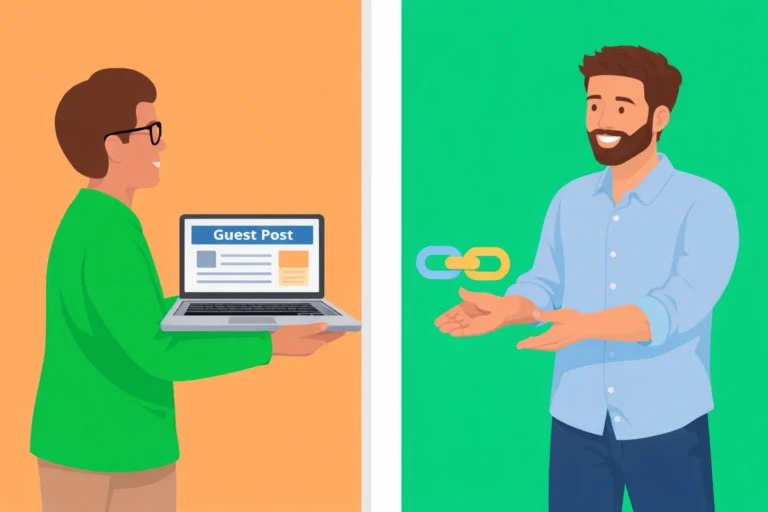
Guest blogging means writing posts for other sites in your field. You earn a link back inside the article or author bio. Pick relevant blogs with real traffic.
2. Broken Link Building
Broken link building finds dead links on other sites. You offer your page as the replacement. It helps the site owner and earns you a link.
3. Contextual Link Building
Contextual link building earns links placed inside article body text. These links carry the most authority. They sit among relevant content, not in footers.
4. Digital PR
Digital PR creates newsworthy stories that journalists cite. Think original data, surveys, or expert takes. It can earn high-authority links at scale.
5. HARO and Expert Quotes
HARO connects you with reporters seeking sources. You answer their query with a useful quote. In return, you get a link from a news site.
6. Niche Edits
Niche edits add your link to an existing, indexed article. The page already has age and authority. This passes value faster than a brand-new post.
7. Resource Page Outreach
Resource pages list helpful links on a topic. You pitch your guide or tool as an addition. These pages often hold strong authority.
8. Infographic Link Building
Infographic link building turns data into shareable visuals. Other sites embed your graphic and link back. Visual content earns links naturally.
9. Skyscraper Technique
The skyscraper technique improves on top-ranking content. You make it longer, fresher, and more useful. Then you pitch it to sites linking to the old version.
10. Competitor Backlink Analysis
Competitor backlinks show where rivals get their links. You target the same sites for your own. It reveals proven link opportunities.
11. Unlinked Brand Mentions
Some sites mention your brand without a link. You reach out and ask them to add one. These are easy wins since they already know you.
12. Linkable Assets
Linkable assets are free tools, guides, or studies. People link to them without being asked. One strong asset can earn links for years.
13. Internal Linking
Internal links connect your own pages to each other. They pass authority from strong pages to new ones. Use them to support fresh content and key money pages.
14. Q&A and Community Sites
Sites like Quora and Reddit let you answer real questions. A helpful answer can include a relevant link. Add value first, and keep links natural, not spammy.
15. Content Repurposing
Repurposing turns one asset into many formats. A guide becomes a video, a slide deck, or a thread. Each new format opens a fresh chance to earn links.
How to Choose the Right Strategy
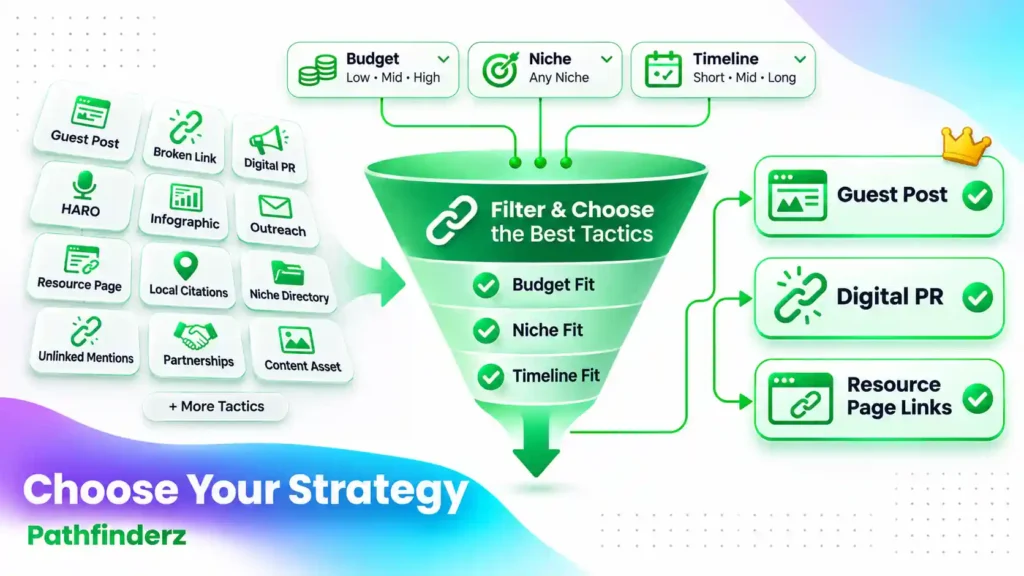
You cannot run all 12 tactics at once. The best strategy fits your niche, budget, and time. Use these factors to pick the right mix.
- Your budget. Niche edits and PR cost more than outreach.
- Your skills. Guest posting needs writing; PR needs pitching.
- Your niche. Some tactics suit local, others suit SaaS or news.
- Your timeline. Niche edits work fast; linkable assets build slowly.
Start with two or three tactics you can repeat. Mix one fast tactic with one slow, compounding one. Review results after 90 days, then double down on winners. Drop any tactic that brings weak or risky links.
White Hat vs Black Hat Strategies
Every link building strategy is white hat or black hat. The choice decides your long-term safety. Google rewards one and punishes the other.
White hat strategies earn links through value and outreach. All 12 tactics above are white hat. They are slow but safe and durable.
Black hat strategies buy or spam links at scale. Private blog networks, link farms, and paid links fall here. They can bring fast gains, then sudden penalties.
One Google update can erase black-hat rankings overnight. For a real business, white hat is the only safe path. Keep every link clean, relevant, and editorial.
How to Measure Link Building Results
A strategy only works if you track it. Measure the right metrics to see what pays off. Focus on these core numbers.
- Referring domains. The count of unique sites linking to you.
- Domain Rating. A score of your overall link authority.
- Keyword rankings. Where your target pages sit in search.
- Referral traffic. Visitors who arrive through your backlinks.
Check these every month, not every day. Links take weeks to show ranking effects. Use backlink monitoring to catch lost or toxic links early. Tie each metric back to the tactic that earned it.
Frequently Asked Questions
What is the best link building strategy?
There is no single best strategy for every site. Guest blogging and digital PR work well for most niches. The best one depends on your budget, skills, and goals.
Which link building strategy is fastest?
Niche edits and broken link building bring links fastest. The target pages already exist and hold authority. Linkable assets are slower but compound over time.
How many link building strategies should I use?
Start with two or three strategies you can repeat. Running too many at once spreads your effort thin. Add more only after the first few show results.
Are these link building strategies safe for Google?
Yes, all 12 strategies here are white hat. They earn links through value, not spam or payment. Avoid private blog networks and paid links to stay safe.
What are the best link building techniques?
The best link building techniques are guest blogging, digital PR, and niche edits. Broken link building and linkable assets also work well. Follow best practices by keeping links relevant and editorial.
Conclusion
The best link building strategies share three traits. They are relevant, safe, and repeatable. Pick two or three tactics that fit your niche and run them with focus.
Mix one fast tactic with one slow, compounding one. Track your referring domains and rankings each month. Keep every link white hat to protect your site long term. Done right, these strategies turn into a lasting ranking edge.