Competitor Backlinks: How to Find, Analyze, and Replicate Them
Competitor backlinks are the links pointing to websites that compete with yours in search. Studying them shows you where rivals earn their links. That insight turns link building into research instead of guesswork. You find sites that are already willing to link to content like yours. This makes outreach faster and far more likely to work. What follows is a practical, tool-neutral way to find and use competitor backlinks.
What Are Competitor Backlinks?
Competitor backlinks are inbound links that point to your rivals’ pages. Each one acts as a vote from another site toward that competitor. When you list these links, you see their referring domains. Those domains are proven link sources inside your niche. A site that links to a competitor may well link to you too. That single idea drives the entire strategy.
Two kinds of competitors matter here. Domain-level competitors rank for many of the same keywords you target. Page-level competitors rank for one specific keyword tied to a page. Both hold useful backlink profile data worth studying.
Why Competitor Backlink Analysis Works
Backlinks remain a major ranking signal for Google. Earning them from strong, relevant sites builds trust over time. Competitor backlink analysis shortcuts the hardest part of the job. You start from a list of domains with a proven habit of linking out. That beats cold outreach to sites that never link to anyone.
There is a second payoff worth noting. The gap between their links and yours is measurable. Sites that link to several competitors, but not to you, are easy wins. This measurable gap is often called the backlink gap or link intersect.
How to Identify the Right Competitors
Pick the wrong competitors and the whole analysis misleads you. Start with the sites that rank above you for target keywords. Search your main keywords in an incognito window to reduce personalization. Note the domains that appear again and again in the top ten. Choose three to five of them to study closely. Tracking more than that usually adds noise, not clarity.
Keep two checks in mind before you commit to a competitor:
- Relevance: the site should sit in your niche, not a giant like Amazon.
- Authority: check their domain rating and how quickly they gain new links.
How to Find Competitor Backlinks Free
You can gather useful data without a paid subscription. Free methods carry real limits, so treat them as a starting point.
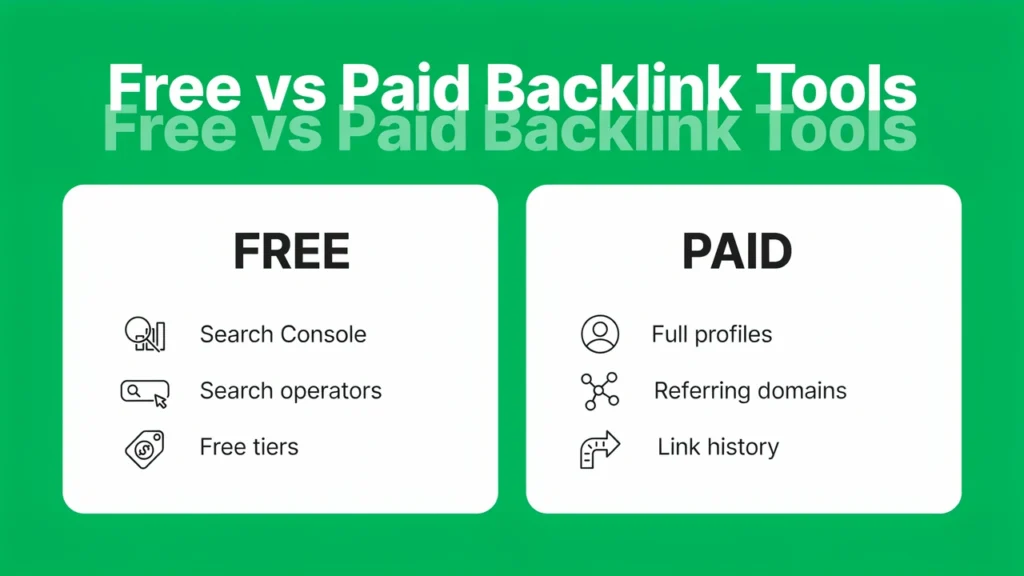
Google Search Console is free but shows only your own verified site. It lists your top linking sites and linked pages under the Links report. It does not show competitor data, so it cannot compare profiles. For rival research, you still need a third-party tool.
The old link: operator no longer works as a backlink checker. Google deprecated it around 2016, and it now returns a small, unreliable sample. Do not lean on it for any serious analysis.
Search operators still earn their place. Exact-phrase and footprint searches surface guest posts, resource pages, and brand mentions. These reveal real opportunities in an afternoon, though not the full profile.
Free tool tiers give the clearest competitor snapshot:
- Ahrefs free backlink checker shows a competitor’s top 100 backlinks.
- Ubersuggest and Moz’s free tier allow a limited number of lookups each.
Using Paid SEO Tools for the Full Picture
Paid crawlers give the complete view that free tools cannot. They pull full backlink lists, referring domains, and link history. Popular options include Ahrefs, Semrush, Majestic, and Moz.
The workflow stays similar across every tool:
- Enter a competitor’s domain into the tool’s site explorer or backlink report.
- Open the backlinks list and sort by link quality.
- Filter for dofollow links from the stronger domains.
- Export the referring domains into a spreadsheet.
- Repeat for each competitor, then combine the lists.
A link intersect or backlink gap report speeds this up. It flags the domains that link to several competitors at once.
What Metrics to Analyze
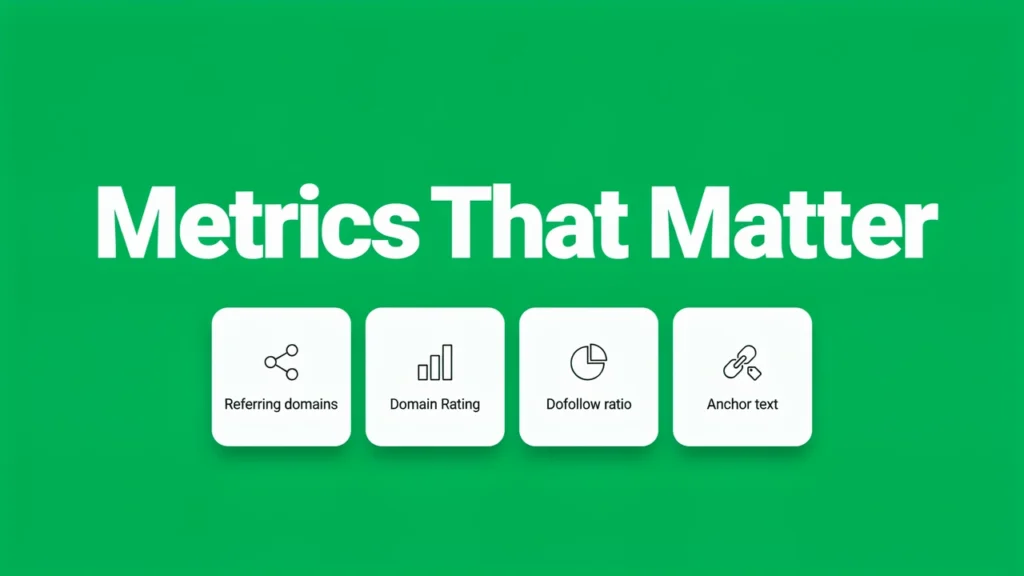
A raw list of links means little without context. Focus on the metrics that predict link value and effort. The table below explains what each one tells you.
| Metric | What it shows | Why it matters |
|---|---|---|
| Referring domains | Unique sites linking in | Many unique domains beat many links from one site |
| Domain Rating or Authority | Strength of the linking site | Higher scores usually pass more value |
| Dofollow vs nofollow | Whether a link passes credit | Shapes the real ranking impact |
| Anchor text | Words used inside the link | Reveals topic focus and over-optimization risk |
| Link velocity | Speed of new links gained | Signals how active their campaign is |
| Most-linked pages | Their best-performing content | Shows what actually earns links in your niche |
Weigh the dofollow ratio against the types of backlinks they hold. Read the anchor spread with sound anchor text practice in mind. Judge each link by its authority before you chase it. Later, backlink monitoring helps you watch how their profile changes.
What Competitor Backlinks Reveal About a Rival’s Strategy
Competitor backlinks are more than a list of outreach targets. Read them well and they expose a rival’s whole approach. Their most-linked page shows the topic your market rewards most. You can build a stronger version and pursue the very same linkers.
The link types tell a story too. Many .edu or .gov links suggest original research or data. A run of podcast links points to an interview campaign. Heavy guest post footprints reveal a guest blogging push you can match.
The Backlink Gap Method
The backlink gap is the fastest route to easy wins. It lists the sites that link to competitors but not yet to you. A domain linking to three of your five competitors is a strong target. It has already shown it will link to sites like yours.
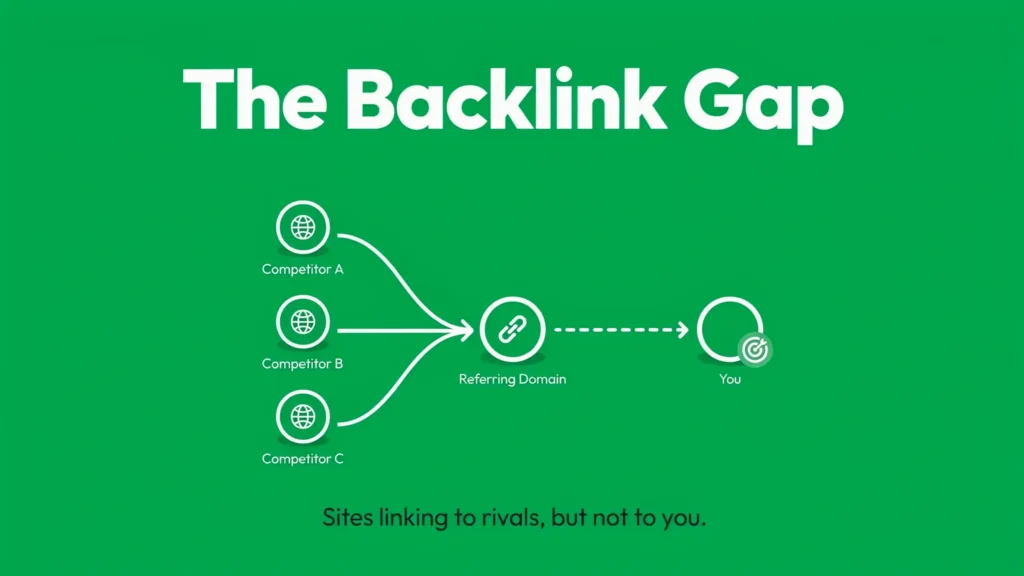
Here is how to run it:
- Load your domain and three to five competitors into a gap or intersect tool.
- Sort by how many competitors each domain links to.
- Prioritize domains with the highest overlap and clear relevance.
- Add the best of them to your outreach shortlist.
How to Replicate a Competitor’s Links
Finding the links is only half the work. Winning them takes a clear plan for each source. Match the tactic to the way the link was first earned.
- Guest posts: pitch the same sites through guest posting outreach.
- Resource pages: ask to be added where a competitor is already listed.
- Broken links: use broken link building on their dead or lost links.
- Linkable content: build a better version and earn the same citations.
Track every target and its outcome as you go. Steady link acquisition compounds over months, not days.
Replicate vs Buy: Staying Within Google’s Guidelines
Earning links from a competitor’s sources is a legitimate tactic. You are simply reaching sites that already link to your topic. Buying or exchanging links for ranking is a different matter. Google treats paid links as link spam under its policies.
The safe path is to replicate the relationship, not purchase the link. Avoid shortcuts and spammy links that invite penalties. Quality and relevance protect your rankings for the long term.
Frequently Asked Questions
Quick answers to the questions people ask most about competitor backlink research.
Can I find competitor backlinks for free?
Yes, in part. Free tool tiers, search operators, and Search Console give a starting point. For a full profile, a paid tool stays more reliable.
Does Google Search Console show competitor backlinks?
No. It shows only the links pointing to your own verified property. Comparing rivals needs a third-party tool.
Is copying competitor backlinks against Google’s rules?
No. Earning links from the same sources is allowed. Buying links to manipulate rankings is what breaks the rules.
How many competitors should I analyze?
Three to five is enough for most sites. More than that adds noise without much extra insight.
Conclusion
Competitor backlinks turn link building into a focused, evidence-led task. They point you to sites with a proven habit of linking out. Analyze the right metrics, find your backlink gap, then replicate what fits. Keep every link earned rather than bought, in line with Google’s guidelines. Handled steadily, competitor backlink analysis builds authority that holds over time.